
The Art of Simplicity: Steamed Chicken Leg Chinese Style
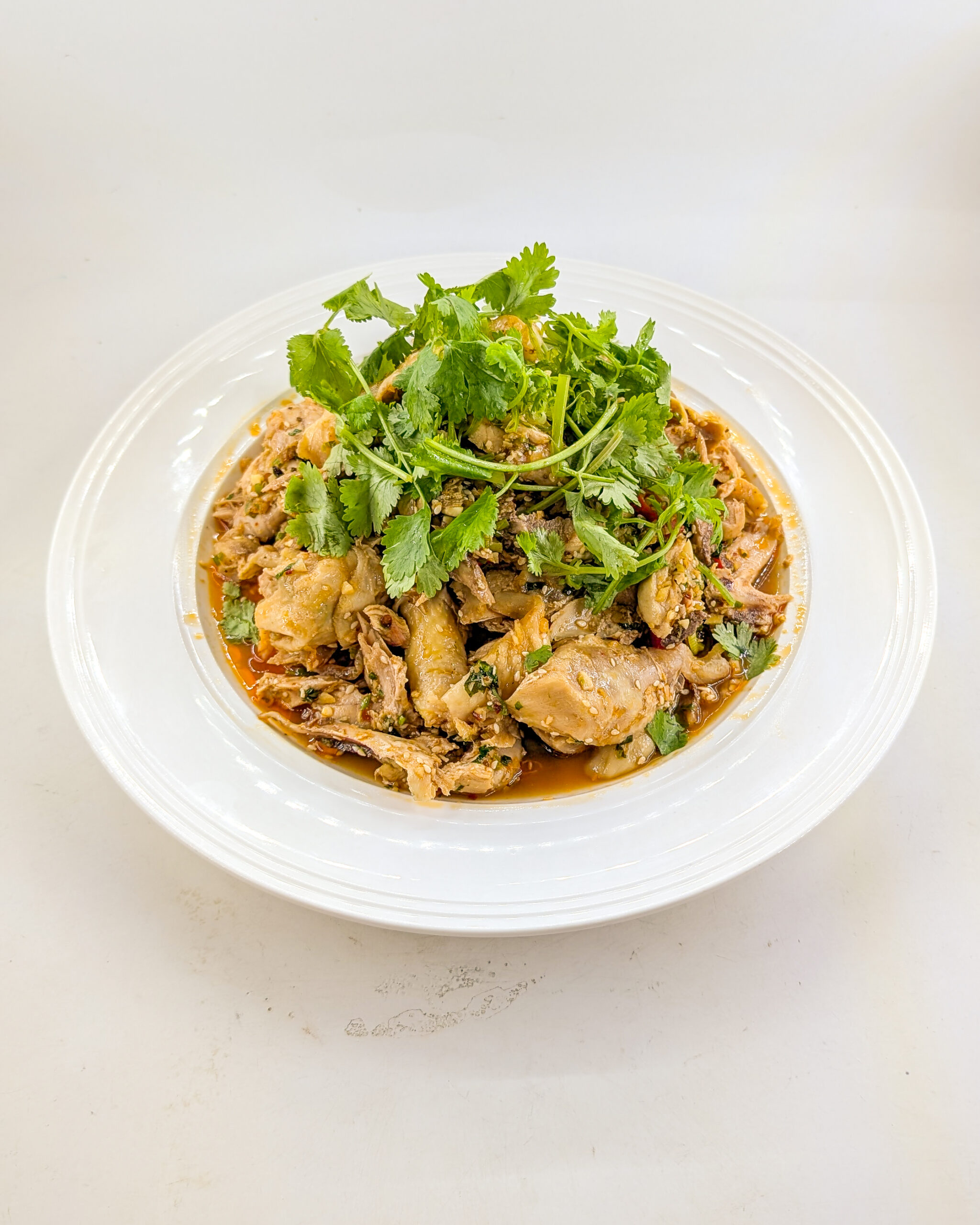
In a world of deep-fried and heavily spiced foods, there is something incredibly sophisticated about a dish that relies entirely on the natural flavor of the ingredients. Steamed Chicken Leg Chinese Style is a testament to this philosophy. It is a dish that requires patience and precision, resulting in meat that is tender, juicy, and refreshing.
What is this dish?
This is a classic Chinese cold appetizer or light main course. It consists of bone-in chicken thighs that are cooked using a two-step method: first boiled briefly, then steamed to perfection. Once cooked, the chicken is chilled, de-boned, and sliced into bite-sized pieces. It is finished with a simple, aromatic rub of light soy sauce and sesame oil, and garnished with fresh vegetables.
How It Tastes
Because the chicken is steamed rather than roasted or fried, the texture is unique.
- The Texture: The meat is exceptionally moist and smooth. Chilling the chicken after cooking tightens the skin and gives the meat a firm, satisfying bite.
- The Flavor: It is savory but clean. The marinade of Chinese rice wine and ginger infuses the meat with a subtle warmth that removes any gamey smell. The final dressing of sesame oil adds a nutty aroma that lingers on the palate.
A Short Story of Its Origins
As noted in the recipe, this dish originates from China. It belongs to a family of “white cut” or cold chicken dishes that are staples in Chinese culinary history. Traditionally, these dishes were created to showcase the quality of the bird. In the days before heavy seasonings were affordable or available to everyone, steaming was the preferred method to preserve the integrity of fresh poultry, ensuring that the natural sweetness of the chicken shone through.
Evolution From Past to Present
In the past, this dish would likely have been made with a whole chicken, served bone-in during festivals or family gatherings. It was a centerpiece dish meant to be shared. Today, the recipe has evolved for modern convenience. Using chicken thighs (bone-in, skin-on) instead of a whole bird makes it more manageable for home cooks and ensures that every piece is dark, juicy meat. The technique of de-boning the meat before serving is also a modern refinement, making it easier to eat with chopsticks.
Where It Stands Today
Today, this style of chicken is a “healthy favorite.” In an era where diners are health-conscious, a dish that is steamed and relies on simple soy and ginger seasonings is highly prized. It is commonly found in Chinese restaurants as a cold starter (appetizer) or in casual eateries served over rice.
Average Price Today
This is an incredibly budget-friendly dish because it utilizes affordable cuts of meat.
- Restaurants: As a cold appetizer portion, this typically costs between $8.00 and $12.00 USD.
- Home Cooking: It is very economical. Since the main ingredient is chicken thighs, you can feed a family of four for approximately $6.00 to $9.00.
Recipe: Steamed Chicken Leg Chinese Style
Origin: China Serves: 4
Ingredients
- 715 ml Water
- 1 no. Chicken thigh, bone-in, skin-on
- 15 ml Chinese rice wine
- ½ stalk Spring onion, cut into 2-cm lengths
- 20 g Ginger, sliced
Garnish
- 1 stalk Spring onion, green part cut into juliennes
- ½ no. Tomato, sliced
- 2 nos. Lettuce leaves, washed
Seasoning
- 15 ml Light soy sauce
- 15 ml Sesame oil
Instructions
1. Par-boil the Chicken Add water into a pot and bring it to a boil. Add the chicken thighs and boil for 10 minutes. Remove the chicken thighs and place them on a plate.
2. Season and Steam Season the par-boiled chicken with Chinese rice wine, the 2-cm lengths of spring onions, and the sliced ginger. Place the chicken on a tray and steam it for about 30 minutes.
3. Flavor and Chill Remove the chicken from the steamer. While it is still warm, rub in the remaining seasonings (light soy sauce and sesame oil). Chill the chicken.
4. Slice and Serve Once chilled, remove the bones from the thigh. Cut the meat into 2 cm wide pieces. Garnish with tomato slices, lettuce, and spring onion juliennes before serving.