Tag: indian cuisine

The Art of Simplicity: Steamed Chicken Leg Chinese Style

The Art of Simplicity: Steamed Chicken Leg Chinese Style

In a world of deep-fried and heavily spiced foods, there is something incredibly sophisticated about a dish that relies entirely on the natural flavor of the ingredients. Steamed Chicken Leg Chinese Style is a testament to this philosophy. It is a dish that requires patience 

A French Classic Duo: Coq Au Vin & Gnocchi Parisienne

A French Classic Duo: Coq Au Vin & Gnocchi Parisienne

There are certain dishes in the culinary world that serve as a rite of passage for any chef. Coq Au Vin (Chicken in Red Wine) paired with Gnocchi Parisienne is one of them. This plate brings together two pillars of French gastronomy: the art of 

The Smoky King of Starters: Tandoori Murgh Tikka

The Smoky King of Starters: Tandoori Murgh Tikka


If you have ever walked past an Indian restaurant and been captivated by the smell of roasting meat and spices, you were likely smelling Tandoori Murgh Tikka. It is the quintessential North Indian appetizer—fiery red, beautifully charred, and packed with flavor. It is the kind of dish that disappears from the plate seconds after it arrives.

What is this dish?

Tandoori Murgh Tikka (or simply Chicken Tikka) consists of small pieces of boneless chicken—specifically leg meat for juiciness—that are marinated in a spiced yogurt mixture and roasted to perfection. The word “Tikka” literally translates to “chunks” or “bits.”

Unlike Tandoori Chicken, which is usually bone-in quarters or halves, Tikka is bite-sized and boneless. It is traditionally cooked on skewers inside a Tandoor (a cylindrical clay oven), which gives it a signature smoky flavor and a slightly charred exterior.

How It Tastes

This dish is a sensory explosion.

  • The Texture: Because it uses boneless leg meat and a yogurt marinade, the chicken remains incredibly tender and juicy inside, even while the outside gets crisp and charred.
  • The Flavor: The first hit is the smokiness from the clay oven (or charcoal). Then comes the tanginess from the lime juice and thick yogurt. The heat comes from Kashmiri red chili powder, which gives it that vibrant color without being unbearably spicy. Finally, you get the complex, earthy notes from the mustard oil and fenugreek leaves (Kasuri Methi).

A Short Story of Its Origins

As noted in the recipe card, this dish originates from North India. Its roots can be traced back to the Mughal era, where boneless pieces of meat were cooked on skewers for the royalty. It was a more refined, easy-to-eat version of the rustic roasted meats enjoyed by soldiers. The Punjab region, with its strong tradition of tandoor cooking, is arguably the spiritual home of the modern Chicken Tikka.

Evolution From Past to Present

Historically, this was a dish cooked over charcoal in open courtyards. As it moved from royal kitchens to street stalls (Dhabas), it became a working-class favorite due to its bold flavors and quick cooking time.

Its most famous evolutionary leap, however, happened when it traveled to the UK. It is widely believed that Chicken Tikka Masala—one of the world’s most popular curries—was invented when a chef added a tomato-cream sauce to leftover Chicken Tikka to keep it moist. So, this dry appetizer is actually the father of the world’s favorite curry!

Where It Stands Today

Today, Tandoori Murgh Tikka is a global standard. You will find it in almost every Indian restaurant on Earth, from fine dining establishments in London to roadside eateries in Delhi. It is incredibly versatile—eaten on its own as a starter, wrapped in naan for a “Kathi Roll,” or tossed into salads for a protein boost.

Average Price Today

Despite being a “royal” dish, it is quite affordable.

  • Restaurants: A serving (usually 6-8 pieces) typically costs between $10.00 and $16.00 USD, depending on the venue.
  • Street Food: In India or Southeast Asian hawker stalls, you might find it for as low as $4.00 to $6.00 USD.

Recipe: Tandoori Murgh Tikka

Origin: North India

Serves: 2

Ingredients

The Meat:

  • 250 g Chicken boneless leg meat, cut into 2” dices

First Marinade (The Rub):

  • 4 g Kashmiri red chilli powder
  • 3 g Lime juice
  • 7 g Salt

Second Marinade (The Yogurt Base):

  • 70 g Thick yoghurt
  • 10 g Ginger paste
  • 10 g Garlic paste
  • 2 g Cumin powder
  • 3 g Garam masala powder
  • 2 g Coriander powder
  • 0.5 g Fenugreek leaves powder (Kasuri Methi)
  • 3 g Mustard oil

For Cooking & Garnish:

  • 30 g Clarified butter (Ghee), for basting
  • 2 g Chaat masala
  • 50 g Vegetable relish
  • 1 nos. Lemon wedge

Instructions

1. First Marinade

Combine the Kashmiri chilli powder, lime juice, and salt to make a paste. Rub the chicken dices evenly with this paste. Refrigerate for 20 minutes to let the meat absorb the initial flavor.

2. Second Marinade

In a large bowl, mix the thick yoghurt with the ginger paste, garlic paste, cumin powder, garam masala, coriander powder, fenugreek leaves powder, and mustard oil. Combine well. Rub this marinade onto the chicken pieces. Keep refrigerated for at least 4 hours (this is crucial for tenderness!).

3. Prepare the Oven (Tandoor Method)

Preheat the tandoori oven one hour before cooking. Arrange the meat pieces on a skewer and put it inside the tandoor. Cook for 8 to 10 minutes.

Tip: Baste with clarified butter and turn the side of the skewer. Cook for 5 minutes more.

4. Alternative: Home Oven Method (Combi Oven)

If you don’t have a tandoor, preheat your oven to 210 °C. Put the chicken on a roasting tray and roast for 10 minutes. Baste with clarified butter, lower the heat to 180 °C, and roast for another 5 minutes.

5. Serve

Brush the cooked chicken with clarified butter and remove from the skewer. Sprinkle with tangy Chaat masala and coriander leaves. Serve hot with vegetable relish and a lemon wedge.

The Crispy King of Street Food: Homemade Falafel

The Crispy King of Street Food: Homemade Falafel

There are few foods in the world that satisfy a craving quite like a freshly fried falafel. It is the ultimate street food: portable, packed with protein, and exploding with herbs and spices. Whether tucked inside a warm pita or served as a mezze platter, 

The Golden Crunch of Spanakopita (Greek Spinach Pie)

The Golden Crunch of Spanakopita (Greek Spinach Pie)

There is something undeniably addictive about the sound of biting into a freshly baked Spanakopita. That loud shatter of crispy pastry followed by the warm, savory filling is one of the world’s great culinary experiences. Whether you call it a spinach pie or a savory 

The Ultimate Comfort Duo: Grilled Ham & Cheese with Classic Deviled Eggs

The Ultimate Comfort Duo: Grilled Ham & Cheese with Classic Deviled Eggs


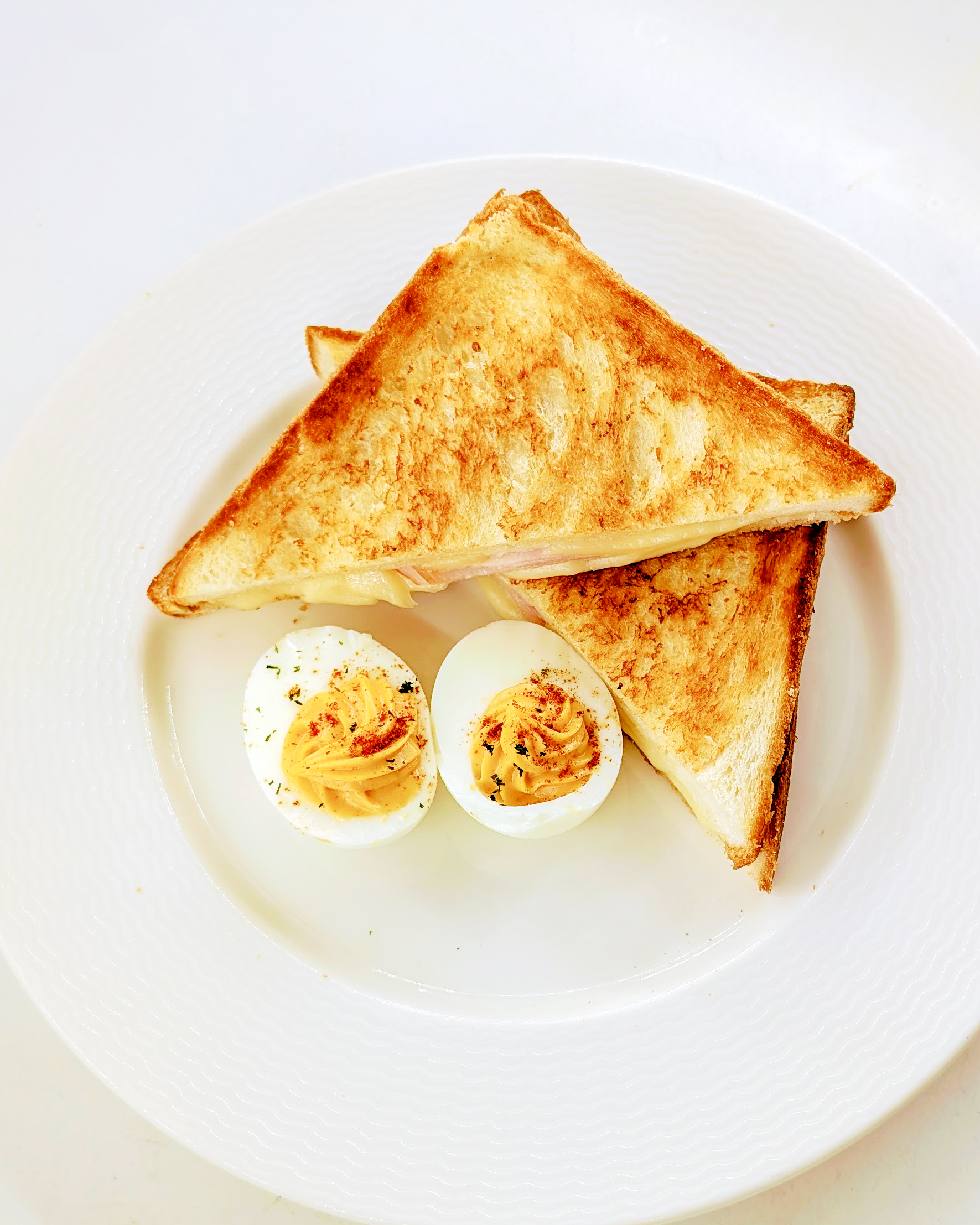
Sometimes, the best meals are the ones that take us back to basics. There is an undeniable magic in the combination of melted cheese, salty ham, and crisp, buttery bread. But when you pair that hot, crunchy sandwich with the cool, creamy richness of a classic deviled egg, you elevate a simple lunch into a feast of textures. This is comfort food at its finest.

What is this dish?

This plate features two culinary icons side-by-side.

First, the Grilled Ham and Cheese Sandwich. This isn’t just a cold cut sandwich; it is a hot, griddled delight where the bread is buttered on the outside to achieve a golden crunch, while the Swiss Emmenthal cheese melts inside to bind the salty cooked ham.

Second, the Deviled Eggs. These are hard-boiled eggs that have been halved, with the yolks removed and mashed into a creamy paste with mayonnaise and mustard, then piped back into the whites and dusted with paprika.

How It Tastes

This pairing is a study in contrasts.

  • The Sandwich: It delivers a satisfying “crunch” followed by the warm, gooey stretch of the Emmenthal. The cheese provides a nutty, slightly sweet flavor that cuts through the savory saltiness of the ham. The black pepper adds a subtle kick of heat.
  • The Eggs: In contrast to the hot, crispy sandwich, the eggs are cool and soft. The filling is velvety and rich, with a tangy bite from the mustard that cleanses the palate after the richness of the buttered toast.

A Short Story of Its Origins

Both components have deep roots. The “grilled cheese” (originally just melted cheese on bread) became a staple in the United States in the 1920s when inexpensive sliced bread and processed cheese became available. Adding ham draws inspiration from the French Croque Monsieur, which appeared in Parisian cafes around 1910.

Deviled eggs date back even further—all the way to ancient Rome, where spicy boiled eggs were served as appetizers. The term “deviled” appeared in the 18th century to describe foods seasoned with spicy or zesty condiments like mustard or pepper.

Evolution From Past to Present

In the mid-20th century, this duo was the quintessential American diner or picnic lunch. The sandwich evolved from open-faced versions to the closed, two-slice staple we know today. Meanwhile, deviled eggs went from being high-society party hors d’oeuvres to a backyard barbecue essential.

Over time, chefs have elevated these humble dishes with artisan sourdoughs, aged gruyère, or truffle oil deviled eggs. But the version pictured here—classic white bread and traditional piping—remains the most nostalgic and beloved.

Where It Stands Today

Today, this combination stands as a “Retro Renaissance” meal. You will find it on the menus of trendy brunch spots that focus on nostalgic comfort food, as well as in hospitals and cafeterias where comfort is a necessity. It is proof that you don’t need expensive ingredients to make a delicious meal; you just need good technique.

Average Price Today

This is a very wallet-friendly dish.

  • Cafes/Diners: A combo plate like this typically costs between $10.00 and $15.00 USD, often served with chips or a pickle.
  • Home Cooking: It is exceptionally cheap to make. You can prepare this plate for roughly $3.00 to $5.00 depending on the quality of your ham and cheese.

Recipe: Grilled Ham & Cheese with Deviled Eggs

Serves: 1-2 Total Time: 20 Minutes

Part 1: The Grilled Ham and Cheese

Ingredients:

  • 4 slices White toast bread
  • 30g Whole butter, softened
  • 60g Cooked ham (thinly sliced)
  • 4 slices Swiss Emmenthal cheese
  • Black pepper, freshly crushed (to taste)

Instructions:

  1. Prep: Gather all your ingredients. Having your butter softened is key for even spreading.
  2. Butter: Spread the butter evenly on one side of each slice of bread. This buttered side will eventually touch the hot pan.
  3. Assemble: On the unbuttered side of a bread slice, layer the Swiss Emmenthal cheese and the cooked ham. Season with a crack of fresh black pepper.
  4. Close: Place the second slice of bread on top, with the buttered side facing out (up).
  5. Grill: Heat a griddle or non-stick pan over medium heat. Place the sandwich in the pan. Cook until the bread is golden brown and crispy.
  6. Flip: Carefully flip the sandwich and cook the other side until golden brown and the cheese has started to melt.
  7. Serve: Transfer to a cutting board. Trim the crusts (optional, for a cleaner look) and cut diagonally into triangles.

Part 2: The Classic Deviled Eggs

Ingredients:

  • 2 Eggs (hard-boiled and peeled)
  • 1 tbsp Mayonnaise
  • 1 tsp Mustard (Dijon or Yellow)
  • Salt and Pepper to taste
  • Paprika and dried parsley (for garnish)

Instructions:

  1. Cut: Slice the hard-boiled eggs in half lengthwise.
  2. Mash: Gently remove the yolks and place them in a small bowl. Mash them with a fork until smooth.
  3. Mix: Stir in the mayonnaise, mustard, salt, and pepper until you have a creamy paste.
  4. Fill: Pipe or spoon the yolk mixture back into the egg white halves.
  5. Garnish: Sprinkle with paprika and dried parsley for color.
  6. Plating: Arrange the two deviled eggs on the plate next to your hot sandwich triangles. Serve immediately while the cheese is still gooey!
The Golden Sweetness of Steamed Pumpkin Pudding (Khanom Fak Thong)

The Golden Sweetness of Steamed Pumpkin Pudding (Khanom Fak Thong)

When most people think of pumpkin desserts, they think of heavy autumn pies. But in Thailand, pumpkin is transformed into something delicate, chewy, and vibrant. This is Khanom Fak Thong, or Steamed Pumpkin Pudding. It is a dessert that perfectly captures the Thai philosophy of 

The Zesty Crunch of Spicy Mung Bean Noodle Salad (Yum Woon Sen)

The Zesty Crunch of Spicy Mung Bean Noodle Salad (Yum Woon Sen)

If you are looking for a dish that wakes up every single taste bud in your mouth, this is it. Spicy Mung Bean Noodle Salad, widely known in Thailand as Yum Woon Sen, is a vibrant explosion of textures and flavors. It is light, healthy, 

Estofado de Pollo: The Warm Hug You Can Eat

Estofado de Pollo: The Warm Hug You Can Eat

If there is one dish that defines “home cooking” across the Spanish-speaking world, it is Estofado de Pollo. This isn’t just a chicken stew; it is a masterclass in building flavor through patience. With its rich, tomato-based sauce, tender root vegetables, and aromatic spices, this dish is the culinary equivalent of a warm blanket on a cold day.

What is this dish?

Estofado de Pollo is a traditional chicken stew. The word estofado comes from the Spanish verb estofar, which essentially means to braise or stew meat in a closed vessel so it cooks in its own juices.

While recipes vary from Spain to Mexico to Peru, the core elements remain the same: bone-in chicken pieces browned for flavor, then simmered slowly with a “sofrito” (a base of onions, garlic, and tomatoes) and hearty chunks of potatoes and carrots. This specific version incorporates cumin and chili powder, giving it a lovely depth and warmth.

How It Tastes

The magic of this dish lies in the sauce. Because the chicken is cooked on the bone, the broth becomes rich and gelatinous, coating every vegetable.

  • The Flavor: It is savory and earthy. The sweetness of the cooked carrots and red onions balances the slight acidity of the tomatoes. The cumin adds a smoky, nutty undertone, while the chili powder provides a gentle warmth without necessarily being spicy-hot.
  • The Texture: The chicken becomes fall-off-the-bone tender. The potatoes act as sponges, absorbing the savory sauce, while the peas add a little pop of sweetness and texture at the end.

A Short Story of Its Origins

The technique of estofado has its roots in medieval Spanish cuisine. Originally, it was a way to make tougher cuts of meat palatable by cooking them slowly over low heat.

When Spanish explorers and settlers arrived in the Americas, they brought this technique with them. However, they adapted the dish to include ingredients native to the “New World,” specifically tomatoes and potatoes. This fusion created the version of Estofado de Pollo that is now a staple across Latin America and Spain.

Evolution From Past to Present

In the past, an estofado was strictly a peasant dish, often made with whatever vegetables were available in the garden and older hens that were no longer laying eggs (which required long cooking times to become tender).

As the dish evolved, it became more refined. The addition of specific spices like cumin and the deliberate layering of flavors—searing the meat first, then deglazing—turned it from a survival meal into a celebrated family tradition. In places like Peru, it might include aji panca peppers; in Spain, it might lean heavier on wine.

Where It Stands Today

Today, Estofado de Pollo stands as a pillar of comfort food. It is rarely found in high-end, molecular gastronomy restaurants because it defies “fancy” presentation—it is meant to be rustic and messy. However, it is a superstar in fondas (small family-run restaurants) and home kitchens globally. It is the go-to meal for Sunday family gatherings or for meal-prepping because it tastes even better the next day.

Average Price Today

This is one of the most economical dishes you can make, which is part of its enduring popularity.

  • Restaurants: If you find this in a casual Latin or Spanish bistro, expect to pay between $12.00 and $18.00 USD.
  • Home Cooking: It is incredibly budget-friendly. Using a whole chicken and root vegetables, you can feed a family of four for roughly $10.00 to $12.00 total.

Recipe: Estofado de Pollo (Chicken Stew)

Origin: Spain Serves: 4

Ingredients

The Protein & Veg:

  • 1 whole Chicken, cut into quarters
  • 300g Carrots, cut into large dice
  • 300g Potatoes, cut into large dice
  • 100g Frozen peas
  • 1 Red onion, diced
  • 3 Tomatoes, chopped

The Liquid & Aromatics:

  • 500ml Chicken Stock
  • 2 cloves Garlic, chopped
  • 30g Chili powder
  • 15g Cumin powder
  • Vegetable oil (as needed for frying)
  • Fresh Coriander, chopped (for garnish)

Seasoning:

  • Salt (to taste)
  • Pepper (to taste)

Instructions

1. Mise-en-place Start by preparing your workspace. Scale and measure all your ingredients. Chop your vegetables and quarter the chicken. Having everything ready makes the cooking process smooth.

2. Sear the Chicken In a large pot, heat the vegetable oil over medium-high heat. Season your chicken pieces and place them in the pot. Sear them until the skin is golden brown. You aren’t cooking them through yet, just building flavor. Remove the chicken from the pot and set aside.

3. Make the Base In the same pot (don’t clean it—keep those flavorful chicken juices!), add the diced onion, chopped garlic, tomatoes, cumin powder, and chili powder. Fry this mixture until the tomatoes start to break down and turn into a thick paste. This should smell amazing.

4. The Simmer Add the carrots, potatoes, chicken stock, and the seared chicken back into the pot. Bring the liquid to a boil, then reduce the heat to a simmer.

5. Cook Let it cook gently for about 25 minutes. You are looking for two things: the chicken should be cooked through, and the root vegetables (potatoes and carrots) should be soft and tender.

6. Finish Stir in the frozen peas during the last few minutes of cooking so they stay bright green. Taste the sauce and season with salt and pepper as needed.

7. Serve Garnish with fresh chopped coriander and serve hot. This dish pairs perfectly with steamed white rice to soak up that delicious sauce.

The Golden Comfort of Baked Onion Soup

The Golden Comfort of Baked Onion Soup

There is perhaps no soup in the world more satisfying to look at—and eat—than a properly made Baked Onion Soup, or Soupe à l’Oignon Gratinée. It is the definition of comfort: a deep, flavorful broth hiding beneath a cap of toasted bread and bubbling, browned