
The Golden Taste of Summer: Mango Kheer
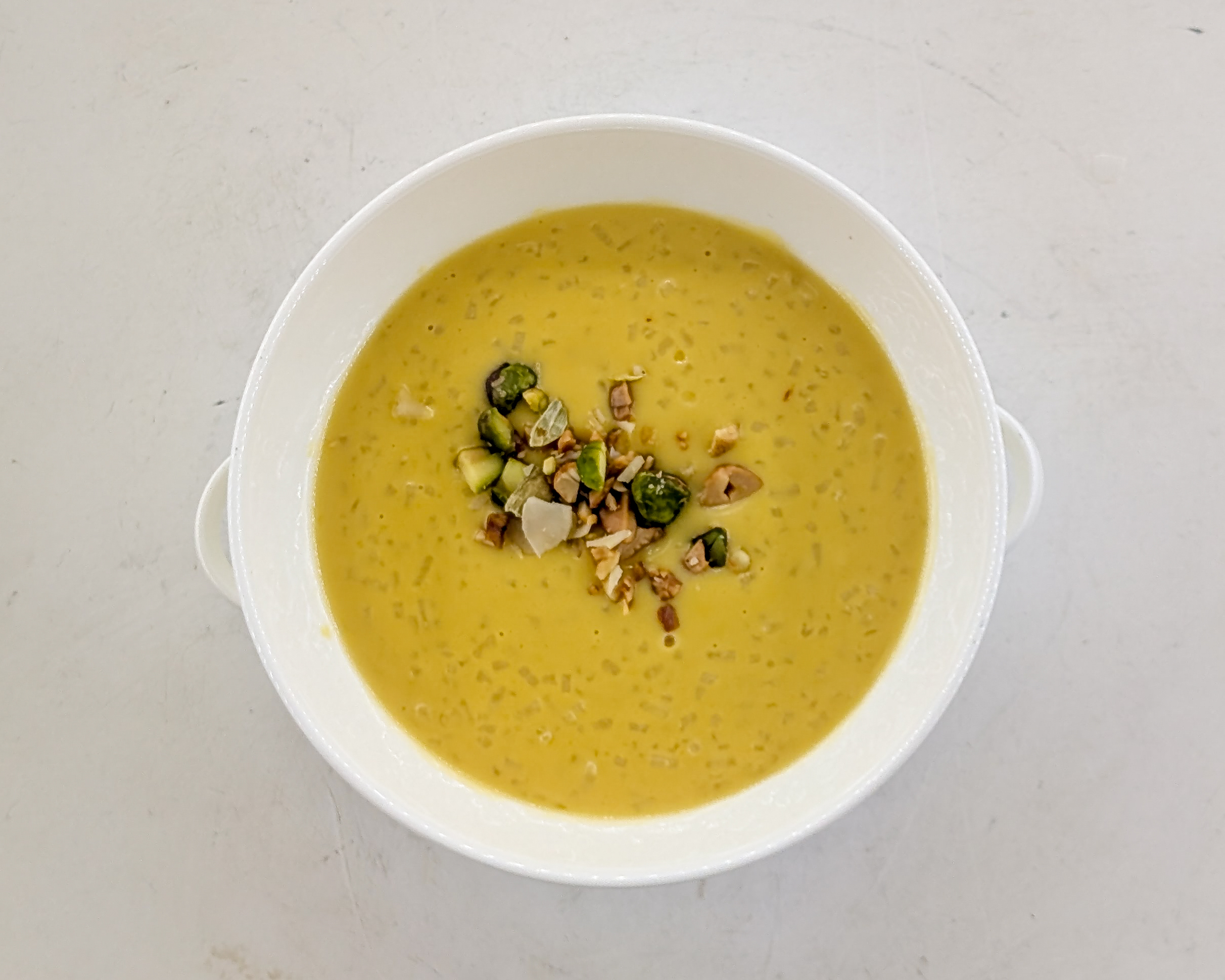
If you travel to North India during the peak of summer, there is one flavor that dominates everything: Mango. Known as the “King of Fruits,” it finds its way into drinks, curries, and most importantly, desserts. Mango Kheer is the ultimate celebration of this fruit—a creamy, rich rice pudding that turns a simple bowl of milk and rice into golden luxury.
What is this dish?
Mango Kheer (or Aam Ki Kheer) is a fruit-infused variation of the traditional Indian rice pudding. It is made by simmering full cream milk and Basmati rice until the mixture reduces to a thick, creamy consistency. Unlike Western rice puddings which often use short-grain rice, this version uses aromatic Basmati rice that is soaked and crushed to create a smoother texture. The star ingredient is mango pulp, which is folded in at the end to give the dish its signature yellow hue and tropical flavor, finished with fresh mango cubes and crunchy mixed nuts.
How It Tastes
This dessert is comfort food with a refreshing twist.
- The Texture: It is incredibly creamy and velvety. Because the rice is crushed before cooking, it blends seamlessly with the thickened milk rather than standing apart as distinct grains.
- The Flavor: The base is milky and sweet, carrying the floral aroma of the Basmati rice. The mango pulp adds a lush, fruity sweetness that isn’t acidic, while the pistachios, cashews, and almonds provide a nutty crunch that breaks up the softness.
A Short Story of Its Origins
Kheer itself is arguably one of the oldest desserts in the world. Its name is derived from the Sanskrit word Ksheer, meaning milk. It was mentioned in ancient Ayurvedic texts and was traditionally offered to deities in Hindu temples as a symbol of purity and abundance. The mango variation likely evolved in the royal kitchens of North India during the Mughal era, where chefs were known for incorporating seasonal fruits like mangoes and pomegranates into rich dairy desserts to impress the courts.
Evolution From Past to Present
In the past, Kheer was a slow-cooked labor of love, often simmered for hours over wood fires until the milk caramelized and turned pinkish. It was sweetened with jaggery or raw sugar. As it evolved, refined sugar became the norm for a cleaner taste that preserves the color of ingredients like saffron or mango. While traditional Kheer is made year-round, Mango Kheer was historically strictly seasonal, made only when the sweet Alphonso or Kesar mangoes were ripe.
Where It Stands Today
Today, Mango Kheer is a staple on the menus of Indian restaurants worldwide, often served chilled as a refreshing end to a spicy meal. While purists still wait for mango season to make it with fresh fruit, the availability of high-quality canned mango pulp allows home cooks and chefs to enjoy this golden treat all year round.
Average Price Today
This is an affordable luxury, though fresh mangoes can drive the price up when out of season.
- Restaurants: A serving in a casual to mid-range Indian restaurant typically costs between $6.00 and $10.00 USD.
- Home Cooking: It is very budget-friendly. A large batch serving four people costs roughly $5.00 to $8.00 to make at home, depending on the price of the nuts and mangoes.
Recipe: Mango Kheer (Mango Flavoured Rice Pudding)
Origin: North India Serves: 4 (500 g)
Ingredients
- 500 ml Full cream milk
- 50 g Basmati rice
- 50 g Sugar
- 125 ml Mango pulp
- 20 g Mixed nuts, sliced (Cashew nuts, Pistachios, and Almonds)
- 50 g Mango cubes (1cm x 1cm size)
Instructions
1. Prep the Rice Wash the Basmati rice and soak it in water for 30 minutes. After soaking, drain the water out and crush the rice grains (this helps thicken the pudding faster).
2. Simmer the Milk Pour the full cream milk into a pot and heat it up. Once warm, reduce the flame to low.
3. Cook the Pudding Add the crushed Basmati rice to the milk, stirring continuously to prevent it from sticking to the bottom. Cook the pudding on low heat until the milk is reduced to 60% of its original volume. This reduction is key to the creamy texture.
4. Sweeten and Flavor Add the sugar and the mango pulp to the pot. Stir the content well for one minute to dissolve the sugar and incorporate the mango flavor. Turn off the flame immediately (do not overcook after adding the fruit).
5. Garnish and Serve Pour the Kheer into serving bowls. Garnish with the sliced mixed nuts and fresh mango cubes. It can be served warm, but it tastes exceptional when chilled.