Tag: Seafood Recipe

The Art of Simplicity: Steamed Chicken Leg Chinese Style

The Art of Simplicity: Steamed Chicken Leg Chinese Style

In a world of deep-fried and heavily spiced foods, there is something incredibly sophisticated about a dish that relies entirely on the natural flavor of the ingredients. Steamed Chicken Leg Chinese Style is a testament to this philosophy. It is a dish that requires patience 

A French Classic Duo: Coq Au Vin & Gnocchi Parisienne

A French Classic Duo: Coq Au Vin & Gnocchi Parisienne

There are certain dishes in the culinary world that serve as a rite of passage for any chef. Coq Au Vin (Chicken in Red Wine) paired with Gnocchi Parisienne is one of them. This plate brings together two pillars of French gastronomy: the art of 

The Smoky King of Starters: Tandoori Murgh Tikka

The Smoky King of Starters: Tandoori Murgh Tikka


If you have ever walked past an Indian restaurant and been captivated by the smell of roasting meat and spices, you were likely smelling Tandoori Murgh Tikka. It is the quintessential North Indian appetizer—fiery red, beautifully charred, and packed with flavor. It is the kind of dish that disappears from the plate seconds after it arrives.

What is this dish?

Tandoori Murgh Tikka (or simply Chicken Tikka) consists of small pieces of boneless chicken—specifically leg meat for juiciness—that are marinated in a spiced yogurt mixture and roasted to perfection. The word “Tikka” literally translates to “chunks” or “bits.”

Unlike Tandoori Chicken, which is usually bone-in quarters or halves, Tikka is bite-sized and boneless. It is traditionally cooked on skewers inside a Tandoor (a cylindrical clay oven), which gives it a signature smoky flavor and a slightly charred exterior.

How It Tastes

This dish is a sensory explosion.

  • The Texture: Because it uses boneless leg meat and a yogurt marinade, the chicken remains incredibly tender and juicy inside, even while the outside gets crisp and charred.
  • The Flavor: The first hit is the smokiness from the clay oven (or charcoal). Then comes the tanginess from the lime juice and thick yogurt. The heat comes from Kashmiri red chili powder, which gives it that vibrant color without being unbearably spicy. Finally, you get the complex, earthy notes from the mustard oil and fenugreek leaves (Kasuri Methi).

A Short Story of Its Origins

As noted in the recipe card, this dish originates from North India. Its roots can be traced back to the Mughal era, where boneless pieces of meat were cooked on skewers for the royalty. It was a more refined, easy-to-eat version of the rustic roasted meats enjoyed by soldiers. The Punjab region, with its strong tradition of tandoor cooking, is arguably the spiritual home of the modern Chicken Tikka.

Evolution From Past to Present

Historically, this was a dish cooked over charcoal in open courtyards. As it moved from royal kitchens to street stalls (Dhabas), it became a working-class favorite due to its bold flavors and quick cooking time.

Its most famous evolutionary leap, however, happened when it traveled to the UK. It is widely believed that Chicken Tikka Masala—one of the world’s most popular curries—was invented when a chef added a tomato-cream sauce to leftover Chicken Tikka to keep it moist. So, this dry appetizer is actually the father of the world’s favorite curry!

Where It Stands Today

Today, Tandoori Murgh Tikka is a global standard. You will find it in almost every Indian restaurant on Earth, from fine dining establishments in London to roadside eateries in Delhi. It is incredibly versatile—eaten on its own as a starter, wrapped in naan for a “Kathi Roll,” or tossed into salads for a protein boost.

Average Price Today

Despite being a “royal” dish, it is quite affordable.

  • Restaurants: A serving (usually 6-8 pieces) typically costs between $10.00 and $16.00 USD, depending on the venue.
  • Street Food: In India or Southeast Asian hawker stalls, you might find it for as low as $4.00 to $6.00 USD.

Recipe: Tandoori Murgh Tikka

Origin: North India

Serves: 2

Ingredients

The Meat:

  • 250 g Chicken boneless leg meat, cut into 2” dices

First Marinade (The Rub):

  • 4 g Kashmiri red chilli powder
  • 3 g Lime juice
  • 7 g Salt

Second Marinade (The Yogurt Base):

  • 70 g Thick yoghurt
  • 10 g Ginger paste
  • 10 g Garlic paste
  • 2 g Cumin powder
  • 3 g Garam masala powder
  • 2 g Coriander powder
  • 0.5 g Fenugreek leaves powder (Kasuri Methi)
  • 3 g Mustard oil

For Cooking & Garnish:

  • 30 g Clarified butter (Ghee), for basting
  • 2 g Chaat masala
  • 50 g Vegetable relish
  • 1 nos. Lemon wedge

Instructions

1. First Marinade

Combine the Kashmiri chilli powder, lime juice, and salt to make a paste. Rub the chicken dices evenly with this paste. Refrigerate for 20 minutes to let the meat absorb the initial flavor.

2. Second Marinade

In a large bowl, mix the thick yoghurt with the ginger paste, garlic paste, cumin powder, garam masala, coriander powder, fenugreek leaves powder, and mustard oil. Combine well. Rub this marinade onto the chicken pieces. Keep refrigerated for at least 4 hours (this is crucial for tenderness!).

3. Prepare the Oven (Tandoor Method)

Preheat the tandoori oven one hour before cooking. Arrange the meat pieces on a skewer and put it inside the tandoor. Cook for 8 to 10 minutes.

Tip: Baste with clarified butter and turn the side of the skewer. Cook for 5 minutes more.

4. Alternative: Home Oven Method (Combi Oven)

If you don’t have a tandoor, preheat your oven to 210 °C. Put the chicken on a roasting tray and roast for 10 minutes. Baste with clarified butter, lower the heat to 180 °C, and roast for another 5 minutes.

5. Serve

Brush the cooked chicken with clarified butter and remove from the skewer. Sprinkle with tangy Chaat masala and coriander leaves. Serve hot with vegetable relish and a lemon wedge.

The Ultimate Comfort Meal: Dal Tadka with Tandoori Breads

The Ultimate Comfort Meal: Dal Tadka with Tandoori Breads

If there is one meal that defines the heart of North Indian cuisine, it is a bowl of golden, creamy lentils served alongside a basket of hot, charcoal-blistered breads. This combination – Dal Tadka paired with Tandoori Naan and Roti – is the kind of 

The Crispy King of Street Food: Homemade Falafel

The Crispy King of Street Food: Homemade Falafel

There are few foods in the world that satisfy a craving quite like a freshly fried falafel. It is the ultimate street food: portable, packed with protein, and exploding with herbs and spices. Whether tucked inside a warm pita or served as a mezze platter, 

The Golden Crunch of Spanakopita (Greek Spinach Pie)

The Golden Crunch of Spanakopita (Greek Spinach Pie)


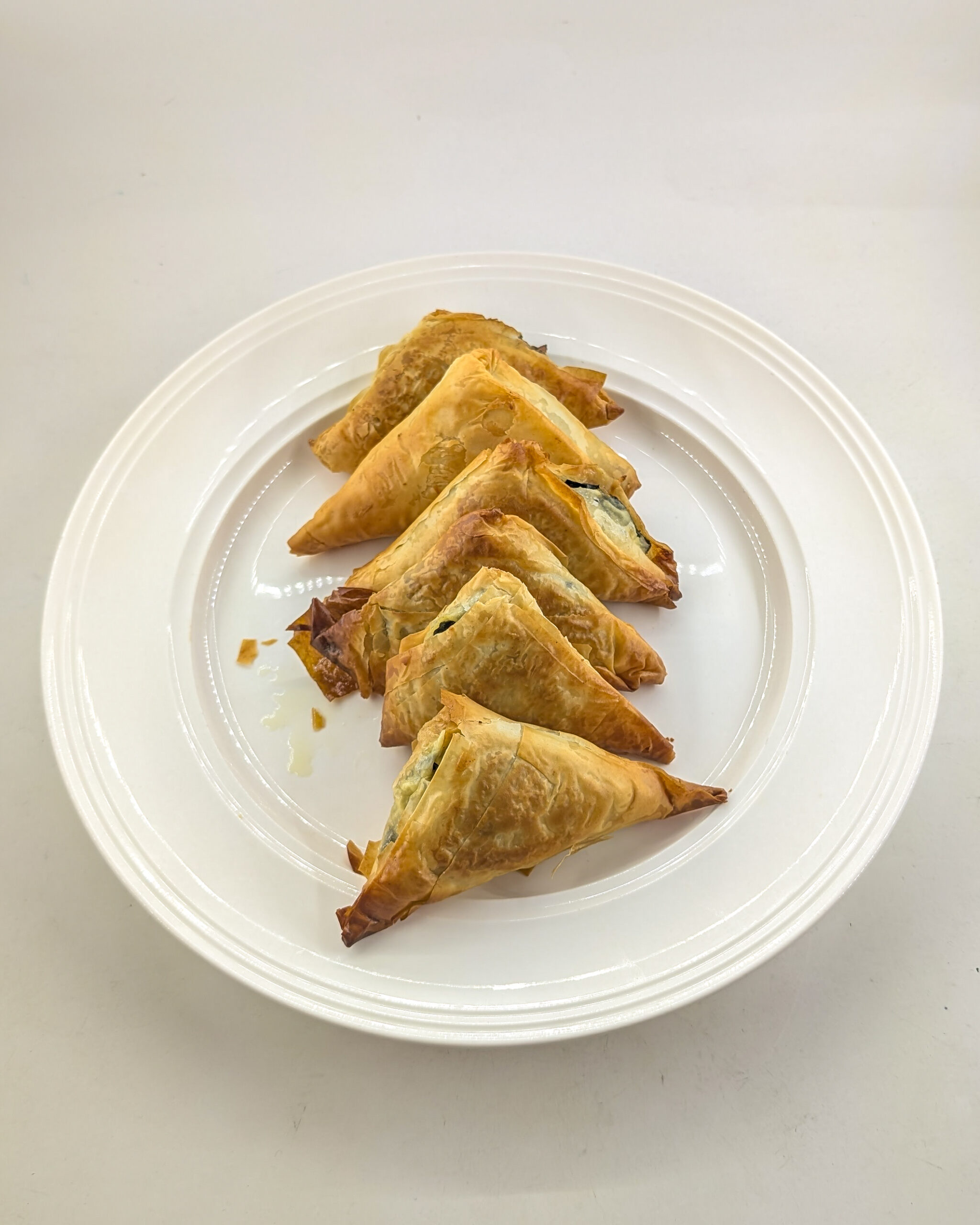
There is something undeniably addictive about the sound of biting into a freshly baked Spanakopita. That loud shatter of crispy pastry followed by the warm, savory filling is one of the world’s great culinary experiences. Whether you call it a spinach pie or a savory turnover, this Greek classic is a masterpiece of texture and flavor.

What is this dish?

Spanakopita is an iconic Greek savory pastry. The name literally translates to “spinach pie” (spanaki = spinach, pita = pie). It consists of a filling made from chopped spinach, feta cheese, onions, and seasonings, all wrapped in layer upon layer of paper-thin phyllo dough.

While it can be baked as one large “tray pie” and cut into squares, the version we are making today—and the one most popular at parties—is the hand-held triangle. Each triangle is individually folded, ensuring that every single bite has the perfect ratio of crispy crust to creamy filling.

How It Tastes

This dish is a celebration of savory contrasts.

  • The Exterior: The phyllo dough, brushed with butter, bakes up into golden, flaky shards that are light and airy.
  • The Interior: The filling is rich and earthy. The spinach provides a deep vegetable flavor, while the feta cheese adds a sharp, salty tang that keeps it from feeling too heavy.
  • The Secret: A pinch of nutmeg. You might not identify it immediately, but it adds a warm, aromatic background note that ties the cheese and spinach together beautifully.

A Short Story of Its Origins

The roots of Spanakopita go deep into ancient history. The concept of wrapping filling in dough dates back to ancient Greece, but the specific technique of using thin, layered dough (phyllo) likely has influences from the Ottoman Empire.

For centuries, this was rural “peasant food.” It was practical: spinach and wild greens grew abundantly in the Greek countryside, and cheese was a staple. Wrapping these ingredients in dough created a portable lunch for farmers working in the fields who needed energy to get through the day.

Evolution From Past to Present

In the past, making Spanakopita was a labor of love. Home cooks would roll out their own dough until it was translucent—a skill that took years to master. The pies were often baked in large, round pans in communal village ovens.

As the dish moved into cities and eventually across the globe, convenience took over. The invention of machine-made frozen phyllo dough in the 20th century revolutionized the dish, allowing home cooks to make it in minutes rather than hours. The shape also evolved; while the large coil or tray pie is traditional for family dinners, the triangle shape became the standard for catering and street food.

Where It Stands Today

Today, Spanakopita is the most famous Greek dish outside of the gyro. You will find it everywhere: in high-end Mediterranean restaurants, in the frozen aisle of supermarkets, and at cocktail parties as a sophisticated finger food. It has transcended its rural roots to become a global comfort food that is vegetarian-friendly and crowd-pleasing.

Average Price Today

Spanakopita is generally quite affordable due to its humble ingredients.

  • Bakeries/Cafes: A single large triangle or a slice of pie typically costs between $4.00 and $8.00 USD.
  • Restaurants: As an appetizer plate (usually 3-4 smaller pieces), expect to pay $10.00 to $16.00 USD.

Recipe: Spanakopita (Greek Spinach Pie)

Origin: Greece

Serves: 2 Pax (Makes approx. 12 triangles)

Ingredients

The Filling:

  • 800g Spinach, blanched and squeezed dry
  • 80g Onion, chopped finely
  • 80g Butter
  • 150g Feta cheese, crumbled
  • Pinch of Nutmeg powder
  • Salt and Pepper (as needed)

The Pastry:

  • Phyllo pastry sheets (as needed)
  • Clarified butter (melted, for brushing)

Instructions

1. Sauté the Aromatics

Prepare your workplace. In a pan, melt the 80g of butter. Add the chopped onion and sauté until it is fragrant and soft.

2. Mix the Filling

Add the blanched spinach to the pan and stir to combine. Season with the nutmeg, salt, and pepper. (Be careful with the salt, as feta is naturally salty!). Remove from heat.

3. Cool and Crumble

Spread the spinach mixture on a tray to cool down. Once it is cool, mix in the crumbled feta cheese.

4. Prep the Pastry

Take one sheet of phyllo pastry and place it on your work surface with a long side near to you. Keep the remaining sheets covered with a damp cloth so they don’t dry out. Brush the sheet with melted clarified butter.

5. Layer

Place a second sheet of phyllo on top of the first one and brush with more butter.

6. Cut Strips

Cut the buttered phyllo stack crosswise into 6 strips. Each strip should be about 2 ¾ inches wide.

7. Fill and Fold

Place a teaspoon of the spinach-feta filling near the bottom corner of a strip. Fold the corner of the phyllo over the filling to form a triangle (like folding a flag).

8. Continue Folding

Continue folding the strip up, maintaining the triangle shape, until you reach the end of the strip.

9. Finish

Place the triangle seam-side down on a large baking sheet. Brush the top generously with butter. Repeat this process with the remaining phyllo and filling until you have used it all up.

10. Bake

Bake in a preheated oven at 180°C (350°F) for 20 to 25 minutes. The pastry should be a deep golden brown and very crispy. Serve warm!


The Ultimate Comfort Duo: Grilled Ham & Cheese with Classic Deviled Eggs

The Ultimate Comfort Duo: Grilled Ham & Cheese with Classic Deviled Eggs

Sometimes, the best meals are the ones that take us back to basics. There is an undeniable magic in the combination of melted cheese, salty ham, and crisp, buttery bread. But when you pair that hot, crunchy sandwich with the cool, creamy richness of a 

The Golden Sweetness of Steamed Pumpkin Pudding (Khanom Fak Thong)

The Golden Sweetness of Steamed Pumpkin Pudding (Khanom Fak Thong)

When most people think of pumpkin desserts, they think of heavy autumn pies. But in Thailand, pumpkin is transformed into something delicate, chewy, and vibrant. This is Khanom Fak Thong, or Steamed Pumpkin Pudding. It is a dessert that perfectly captures the Thai philosophy of 

The Zesty Crunch of Spicy Mung Bean Noodle Salad (Yum Woon Sen)

The Zesty Crunch of Spicy Mung Bean Noodle Salad (Yum Woon Sen)


If you are looking for a dish that wakes up every single taste bud in your mouth, this is it. Spicy Mung Bean Noodle Salad, widely known in Thailand as Yum Woon Sen, is a vibrant explosion of textures and flavors. It is light, healthy, and packs a fiery punch that makes it the perfect appetizer or light lunch.

What is this dish?

This is a traditional Thai salad centered around glass noodles (made from mung bean starch). Unlike wheat pasta, these noodles are transparent, slippery, and chewy. They are tossed with a variety of crunchy vegetables like onions, wood ear mushrooms, and fresh herbs, then dressed in a sharp, spicy vinaigrette.

“Yum” implies a hot and sour salad, while “Woon Sen” refers to the specific glass noodles. It is often served warm or at room temperature, distinguishing it from the cold Western concept of a pasta salad.

How It Tastes

The flavor profile of this salad is the definition of the “Thai taste”—a perfect balance of four key elements:

  • Sour: From generous amounts of fresh lime juice.
  • Salty: From savory fish sauce.
  • Spicy: From fresh bird’s eye chilies.
  • Sweet: A touch of palm sugar to round out the acidity.

The texture is just as exciting. You get the slippery, soft chew of the noodles, the snap of the wood ear mushrooms, the crunch of roasted peanuts, and the crisp bite of raw onions. It is refreshing yet intense.

A Short Story of Its Origins

While noodles were introduced to Thailand by Chinese immigrants, the Yum (salad) preparation is distinctly Thai. The use of mung bean starch to make noodles dates back centuries in Asia as a way to preserve the harvest.

This specific salad originated as a way to create a meal that was light and cooling in the humid tropical heat, yet safe to eat because the meat and noodles were blanched in boiling water just before serving.

Evolution From Past to Present

Historically, this was a humble dish using local herbs and river shrimp. As Thailand globalized, the dish evolved. In the past, it might have been seasoned simply with lime and fish sauce. Today, it is a canvas for variety. You will see versions with minced pork, seafood (squid and prawns), or even hot dogs in modern Bangkok street food stalls. The core concept—spicy, sour, and glass noodles—remains unchanged.

Where It Stands Today

Today, Yum Woon Sen is a global ambassador for Thai cuisine. It is a staple on menus from high-end Bangkok restaurants to takeout spots in London and New York. It has also gained massive popularity in the health community because mung bean noodles are gluten-free and the dish is packed with fresh vegetables and low in oil.

Average Price Today

This is an accessible dish, though seafood versions cost more.

  • Street Food/Hawker: In Southeast Asia, a plate costs between $3.00 and $6.00 USD.
  • Restaurants: In Western countries or sit-down dining, expect to pay $12.00 to $18.00 USD, especially if it includes fresh seafood.

Recipe: Spicy Mung Bean Noodle Salad

Cuisine: Thai Serves: 2

Ingredients

The Base:

  • 80g Dried Mung Bean Noodles (Glass Noodles)
  • 1/4 cup Wood Ear Mushrooms (dried, soaked, and sliced)
  • 1/2 Onion, thinly sliced
  • 1 Tomato, cut into wedges (optional)
  • Small handful of Celery or Coriander leaves, cut into 1-inch lengths

The Dressing:

  • 3 tbsp Lime juice (freshly squeezed)
  • 2 tbsp Fish sauce
  • 1 tbsp Palm sugar (or white sugar)
  • 2 cloves Garlic, finely minced
  • 2-5 Thai Red Chilies, chopped (adjust to your spice tolerance)

The Garnish:

  • 2 tbsp Roasted Peanuts (unsalted)
  • Dried shrimp (optional, for extra umami)

Instructions

1. Prepare the Noodles and Mushrooms Soak the glass noodles in room temperature water for 10 minutes until soft, then cut them into manageable lengths (about 4 inches). Soak the dried wood ear mushrooms in warm water until they expand, then slice them into bite-sized strips.

2. Make the Dressing In a small bowl, mix the lime juice, fish sauce, and sugar. Stir until the sugar is completely dissolved. Add the minced garlic and chopped chilies. Taste it—it should be sour first, then salty, then sweet.

3. Blanch Bring a pot of water to a boil.

  • Add the wood ear mushrooms and boil for 1 minute. Remove with a slotted spoon.
  • Add the soaked noodles to the boiling water. Cook for only 1-2 minutes until they are clear and soft. Do not overcook or they will become mushy. Drain immediately.

4. Toss While the noodles are still warm (this helps them absorb the sauce), place them in a large mixing bowl. Add the cooked mushrooms, sliced onions, and celery/coriander.

5. Dress Pour the dressing over the noodle mixture. Toss well to ensure every strand is coated in the spicy, lime-infused sauce.

6. Serve Transfer to a serving plate. Sprinkle heavily with the roasted peanuts for that essential crunch. Serve immediately—this salad is best enjoyed fresh!

Estofado de Pollo: The Warm Hug You Can Eat

Estofado de Pollo: The Warm Hug You Can Eat

If there is one dish that defines “home cooking” across the Spanish-speaking world, it is Estofado de Pollo. This isn’t just a chicken stew; it is a masterclass in building flavor through patience. With its rich, tomato-based sauce, tender root vegetables, and aromatic spices, this