
The Smoky Magic of Baba Ghanoush
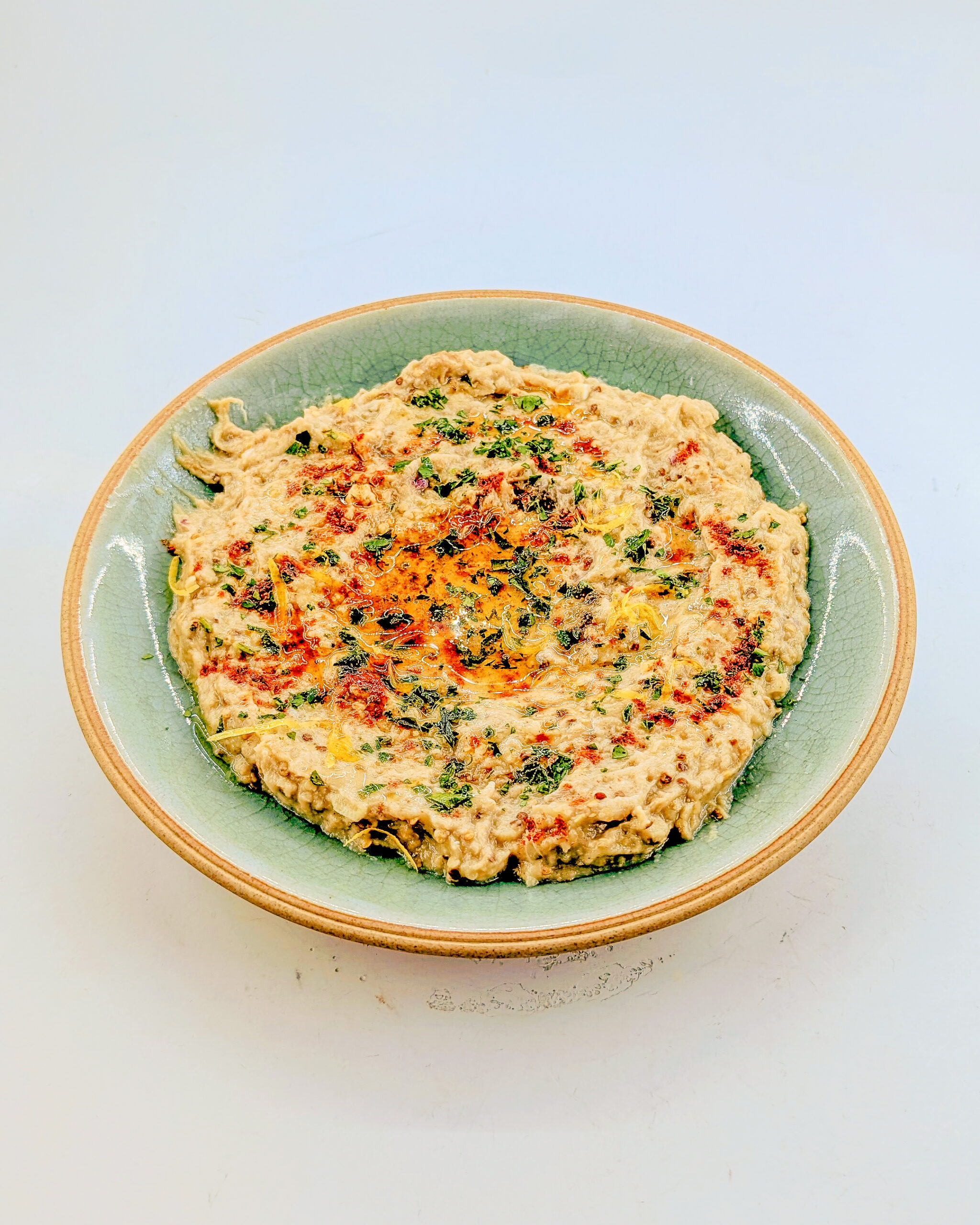
If Hummus is the king of Mediterranean dips, Baba Ghanoush is undoubtedly the sophisticated queen. While they often sit side-by-side on a mezze platter, Baba Ghanoush offers a complexity that chickpeas just can’t match. It is creamy, savory, and defined by one specific flavor profile: an irresistible, deep smokiness.
What is this dish?
Baba Ghanoush is a popular Levantine appetizer or dip made primarily from roasted eggplant (aubergine). The eggplant is cooked until the skin chars and the flesh turns soft and collapsing. This flesh is then scooped out and mixed with tahini (sesame paste), olive oil, lemon juice, and garlic.
Unlike the smooth uniformity of hummus, Baba Ghanoush often has a slightly more rustic, silky texture with strands of eggplant melting into the sauce.
How It Tastes
The defining characteristic of a great Baba Ghanoush is smoke. Because the eggplant is traditionally roasted over an open flame or high heat, the flesh absorbs a fire-roasted flavor that is earthy and robust.
- The Texture: It is luscious and creamy, thanks to the emulsion of olive oil and tahini.
- The Balance: The richness of the sesame paste is cut through by the sharp acidity of fresh lemon juice and the bite of raw garlic. It feels lighter on the stomach than bean-based dips but is just as satisfying.
A Short Story of Its Origins
The dish originates from the Levant region (covering modern-day Lebanon, Syria, Jordan, and Palestine), though it is enjoyed throughout the entire Mediterranean and Middle East.
The name itself has a charming folk etymology. In Arabic, Baba means “father” and Ghanoush means “spoiled” or “pampered.” One legend says the dish was invented by a member of a royal harem who mashed the eggplant so that her elderly, toothless master—the “pampered papa”—could eat it without chewing. Another interpretation is that the eggplant itself is the “pampered” item, treated with care and rich oils.
Evolution From Past to Present
Originally, this dish was strictly a product of the open hearth. Villagers would throw whole eggplants directly onto wood or charcoal fires. This wasn’t just for cooking; it was the only way to get that signature flavor.
As the dish migrated to the West and into modern kitchens, the preparation evolved. Today, many recipes (like the one below) utilize high-heat ovens to roast the vegetable. While some purists insist on charcoal, the oven method makes it accessible for any home cook to enjoy this ancient recipe.
Where It Stands Today
Today, Baba Ghanoush is a global health food superstar. Because it is vegetable-based, gluten-free, vegan, and keto-friendly, it fits into almost every modern dietary lifestyle. It is a standard offering in Mediterranean restaurants, usually served with warm pita bread or crunchy vegetable sticks.
Average Price Today
This is an economical dish that feels luxurious.
- Restaurants: As a mezze or appetizer, a bowl typically costs between $8.00 and $14.00 USD.
- Home Cooking: Eggplants are generally inexpensive. You can make a large family-sized bowl at home for roughly $4.00 to $6.00, making it a very budget-friendly party snack.
Recipe: Baba Ghanoush
Origin: Mediterranean / Greece Serves: 6 Pax
Ingredients
The Base:
- 2 nos. Eggplants (small-to-medium size)
- 2 cloves Garlic, pressed or minced
- 2 tbsps Lemon juice (more if necessary)
- 15g Tahini (Sesame paste)
- 20g Extra-virgin olive oil (reserve a bit for garnish)
Seasonings:
- 2 tbsps Parsley, chopped (reserve a bit for garnish)
- To taste Salt
- 1/4 tsp Cumin, ground
- Pinch Smoked paprika (for garnish)
Instructions
1. Prep the Oven Preheat your oven to 230°C with a rack in the upper third. Line a large, rimmed baking sheet with parchment paper to prevent sticking.
2. Roast the Eggplants Slice the eggplants in half lengthwise. Brush the cut sides lightly with olive oil. Place them cut-side down on the baking pan. Roast for 35 to 40 minutes.
- Goal: The interior should be very tender throughout, and the skin should be collapsing. If using large eggplants, this might take longer.
3. Scoop Set the eggplants aside to cool for a few minutes. Flip them over and scoop out the soft flesh with a large spoon. Discard the skins.
4. Strain (Crucial Step) Place a mesh strainer over a mixing bowl. Transfer the scooped flesh into the strainer. Let it rest for a few minutes and shake/stir it to release excess moisture.
- Why? Removing the “eggplant water” ensures your dip is creamy, not runny.
5. Mash and Mix Discard the liquid. Place the drained eggplant back into the bowl. Add the garlic and lemon juice. Stir vigorously with a fork until the eggplant breaks down. Add the tahini and stir until incorporated.
6. Emulsify While stirring, slowly drizzle in the olive oil. Continue stirring until the mixture is pale and creamy. Use your fork to break up any long strings of eggplant.
7. Season Stir in the parsley, salt, and cumin. Taste it! Add more salt or lemon juice if it needs more “zing.”
8. Serve Transfer to a serving bowl. Use a spoon to create swirls on the surface. Drizzle lightly with olive oil and sprinkle with the remaining parsley and smoked paprika. Serve with pita bread or crackers.