It is the dip that conquered the world. From the mezze tables of the Levant to the lunchboxes of office workers in New York and London, Hummus has become a universal symbol of healthy, savory snacking. But before it was a supermarket staple, it was—and still is—a revered dish with deep historical roots.
What is this dish?
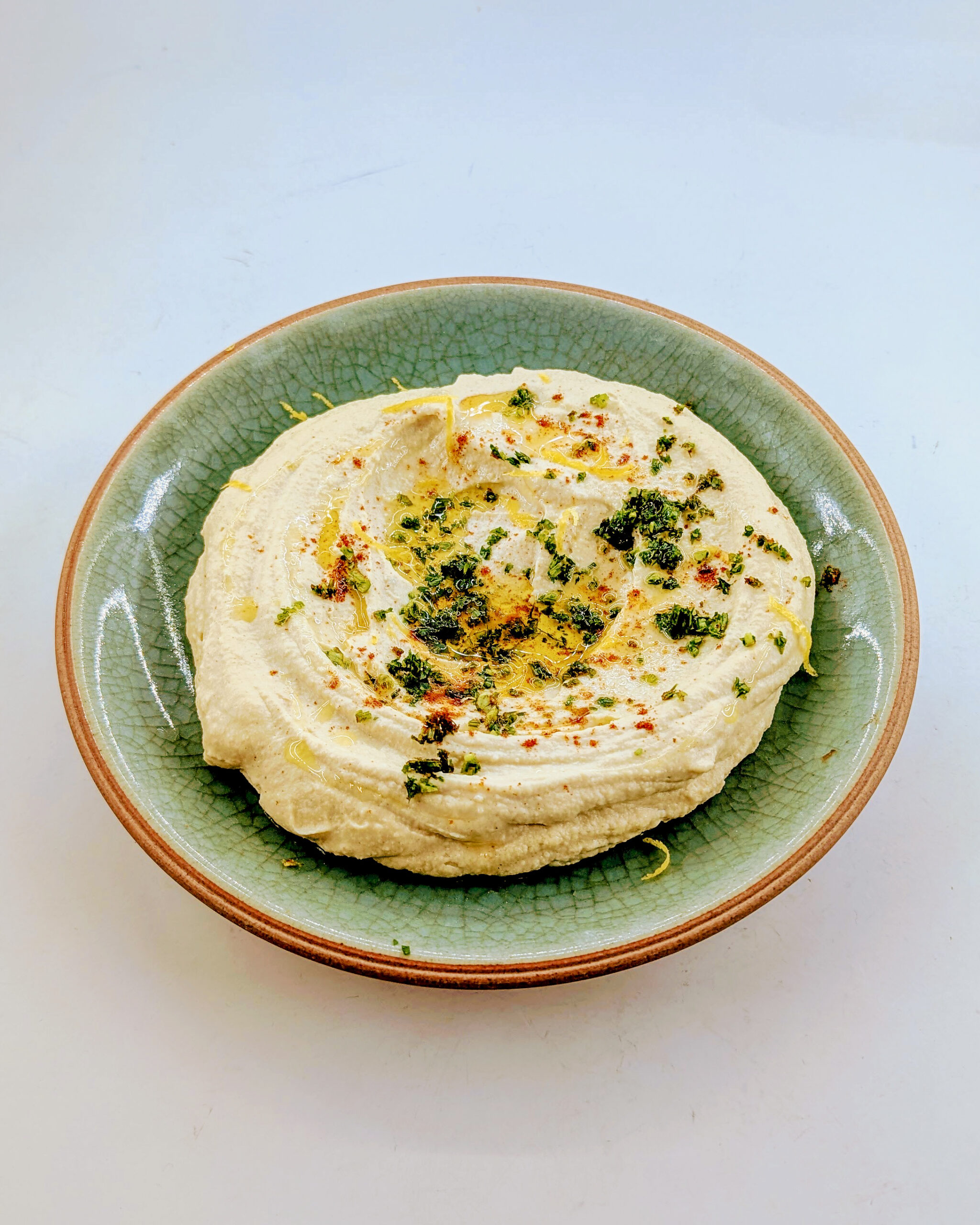
Hummus (specifically Hummus bi Tahina) is a smooth, creamy dip or spread made from cooked, mashed chickpeas blended with tahini (sesame paste), lemon juice, and garlic. It is traditionally finished with a generous drizzle of good olive oil and spices like cumin or paprika. While often eaten as a dip for pita bread, in its home region of the Levant, it is frequently served as a warm, substantial breakfast or dinner dish, not just an appetizer.
How It Tastes
A great hummus is a study in balance.
- The Texture: It should be silky and airy, not pasty or heavy.
- The Flavor: The nutty, earthy richness of the chickpeas and tahini provides a savory base. This is cut through by the sharp brightness of fresh lemon juice and the pungent kick of garlic. The olive oil adds a fruity, grassy finish that rounds everything out.
A Short Story of Its Origins
The exact origin of hummus is a topic of fierce debate—often called the “Hummus Wars”—with Lebanon, Israel, Palestine, and Egypt all claiming it as their own. However, historical evidence points to the medieval Arabic world. The earliest known written recipes for a dish resembling hummus appear in 13th-century cookbooks from Cairo. These early versions were often simple purees of chickpeas with vinegar and pickled lemons, with tahini and garlic joining the party later to create the modern version we know today.
Evolution From Past to Present
In the past, hummus was strictly a regional dish of the Middle East, often made by hand with a mortar and pestle, resulting in a slightly coarser texture. As it moved west in the 20th century, it underwent a “supermarket revolution.” Industrial production made it ultra-smooth and widely available. Unfortunately, this also led to some questionable experiments—like “chocolate dessert hummus”—that traditionalists might find shocking. Historically, it was a peasant food rich in protein; today, it is celebrated as a “superfood” suitable for vegans and health enthusiasts alike.
Where It Stands Today
Today, hummus is a global culinary icon. It has transcended its ethnic roots to become a refrigerator staple in millions of non-Middle Eastern households. In the Middle East, it remains a serious business—there are “Hummusia” (restaurants dedicated solely to hummus) where chefs spend decades perfecting their specific balance of ingredients.
Average Price Today
Hummus is famously affordable, which is part of its global appeal.
- Supermarket Tubs: A standard tub (approx. 10 oz) typically costs between $3.00 and $5.00 USD.
- Restaurants: In a sit-down restaurant, a fresh plate of hummus with warm pita usually ranges from $8.00 to $12.00 USD.
- Homemade: It is incredibly cheap to make at home, costing roughly $0.60 – $1.00 per batch.
Recipe: Traditional Hummus
Origin: Greece / Middle East Yield: 2 cups
Ingredients
- The Base:
- 120 g Chickpeas (dried)
- ½ tsp Baking soda (only if using canned chickpeas)
- The Flavor Profile:
- 2 nos. Lemon, juice only
- 1 clove Garlic, medium-to-large, roughly chopped
- To taste Fine sea salt
- ½ tsp Cumin, ground
- The Emulsifier:
- 60 g Tahini
- 2 to 4 tbsp Chilled water (more as needed)
- Garnish:
- 1 tbsp Extra-virgin olive oil
- Optional: Sprinkle of ground sumac, paprika, or chopped fresh parsley
Instructions
1. Prepare the Chickpeas Place the chickpeas in a medium saucepan. Cover them by several inches of water and bring to a boil over high heat. Continue boiling for about 20 minutes (or longer if using dried) until the chickpeas look bloated, their skins are falling off, and they are quite soft. Tip: If using dried chickpeas, soak them overnight first. If using canned, boiling them with baking soda helps soften them for a smoother texture.
2. Drain and Cool Drain the chickpeas in a fine-mesh strainer and run cool water over them for about 30 seconds. Set them aside (no need to peel them individually!).
3. Mellow the Garlic In a food processor or high-powered blender, combine the lemon juice, garlic, and salt. Process until the garlic is very finely chopped. Let this mixture rest for at least 10 minutes—this allows the harsh raw garlic flavor to mellow out.
4. Whip the Tahini Add the tahini to the food processor (with the garlic/lemon mix) and blend until thick and creamy. While the machine is running, drizzle in 2 tablespoons of chilled water. Scrape down the sides and blend until the mixture is ultra-smooth, pale, and creamy.
5. Blend It All Together Add the cooked, drained chickpeas and the cumin to the food processor. While blending, drizzle in the olive oil. Blend for about 2 minutes until the mixture is super smooth. If it’s too thick, add more chilled water by the tablespoon until you reach your desired creamy texture.
6. Taste and Serve Taste and adjust salt or lemon if needed. Scrape the hummus into a serving bowl. Use a spoon to create those signature “swooshes” on top.
7. Garnish Top with a generous drizzle of olive oil, sumac, paprika, or parsley. Serve immediately or store in the refrigerator for up to 1 week.