
Nasi Kerabu with Spiced Chicken – A Colourful Malaysian Heritage on a Plate
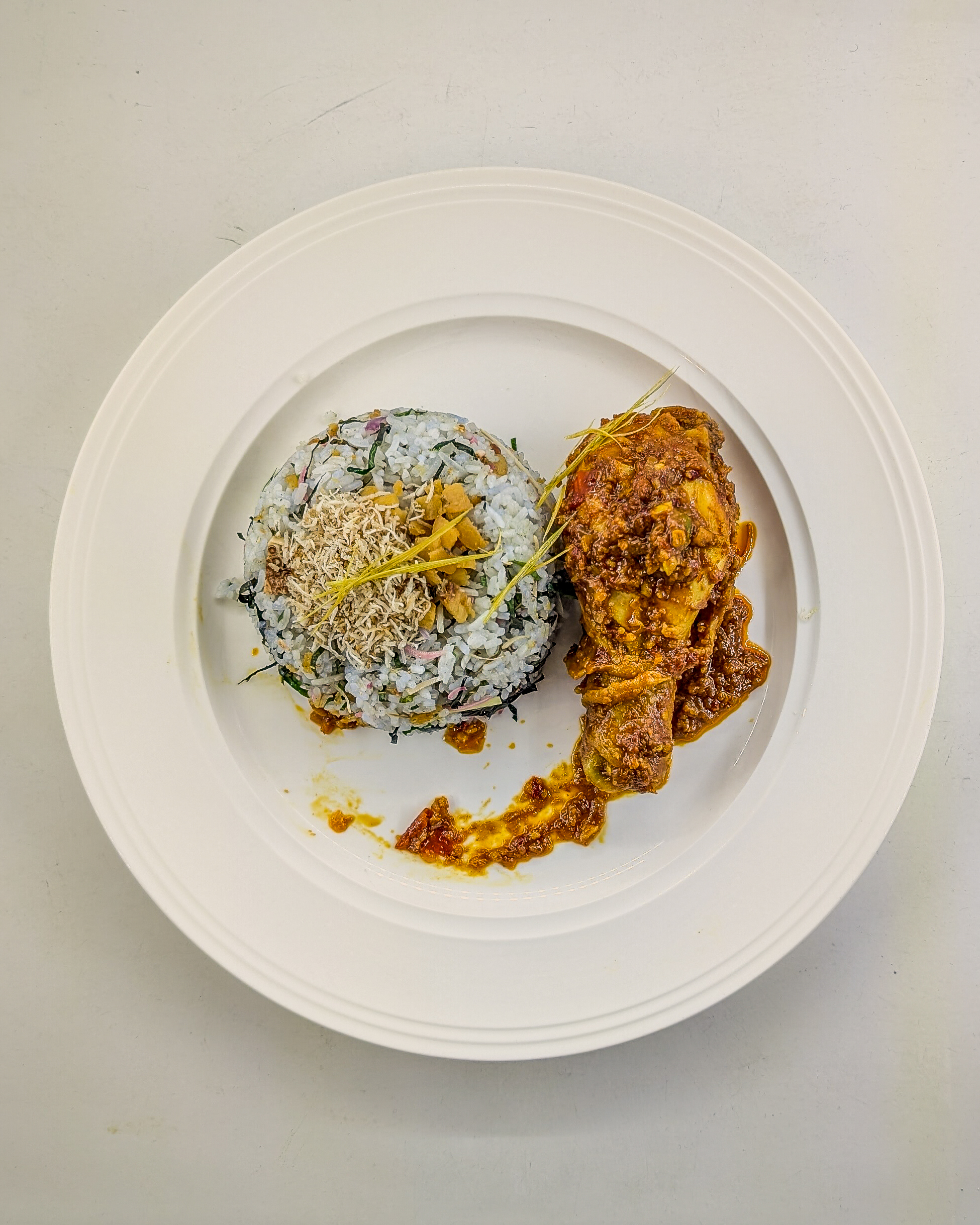
The dish in the image is Nasi Kerabu with Spiced Chicken, a signature Malaysian meal known for its striking blue-tinted herb rice paired with richly seasoned chicken. Nasi Kerabu is instantly recognizable by its vibrant colour and fragrant mix of fresh herbs, toasted coconut, and crunchy condiments. Combined with a deep, spicy chicken gravy, it becomes a beautifully balanced plate of flavour, texture, and aroma.
How It Tastes
Nasi Kerabu is refreshing yet bold.
The rice itself is light, herbaceous, aromatic, and slightly nutty from the combination of shredded herbs and toasted coconut (kerisik). The garnish adds crunch, brightness, and natural sweetness.
The chicken, cooked in a spicy, coconut-based gravy, brings depth: smoky, slightly sweet, savoury, and warmly spiced. Together, it creates a contrast of fresh + fiery, light + hearty, making it one of Southeast Asia’s most beloved comfort foods.
Short Story of Origin
Nasi Kerabu comes from the East Coast of Peninsular Malaysia, particularly Kelantan and Terengganu. Historically, the rice gained its blue colour from bunga telang (butterfly pea flower), which villagers grew in their backyard gardens. The herbs used—torched ginger flower, lemongrass, kaffir lime leaves, ulam—reflected local agricultural life where every household had access to fresh greens and backyard produce.
The dish was traditionally enjoyed during community gatherings, markets, and festive seasons. It was a symbol of togetherness, where families prepared large trays of herbs, sambal, and kerisik in a communal setting.
Has It Changed Over Time?
Originally, Nasi Kerabu used only natural colouring from butterfly pea flowers and simple kampung herbs. Over time, the dish evolved with additional garnishes such as:
- crispy fish flakes
- solok lada (stuffed chilies)
- keropok (fish crackers)
- various sambals for added heat
The chicken accompaniment also differs today. While traditional versions used Ayam Percik, modern cooks pair it with Ayam Rendang, Ayam Masak Merah, or other spiced variations—just like the richly sauced chicken in your photo.
How It Is Enjoyed Today
Today, Nasi Kerabu appears everywhere—from roadside warungs to modern cafés. Chefs now plate it more elegantly, incorporate modern garnishes, and serve it with contemporary side dishes while preserving its nostalgic flavours. It remains a proudly Malaysian dish that celebrates culture, colour, and culinary identity.
Average Price Today
In Malaysia:
- Street stalls / warungs: RM7–RM12
- Cafés / restaurants: RM15–RM25
- Upscale restaurants / modern plating: RM25–RM40
In Singapore:
- Hawker centres: SGD 6–9
- Restaurants: SGD 12–18
Recipe: Nasi Kerabu with Spiced Chicken
Ingredients
For the Nasi Kerabu
- 2 cups rice
- 1½ cups butterfly pea flower water (or plain water)
- ½ cup grated coconut
- 1 tbsp toasted sesame seeds (optional)
- 1 stalk lemongrass, finely sliced
- 2 tbsp kerisik (toasted grated coconut)
- ¼ cup finely sliced herbs:
- kaffir lime leaves
- ulam raja (optional)
- daun kesum
- bunga kantan (ginger flower)
- Salt to taste
For the Spiced Chicken (Rendang/Percik Style)
- 4 chicken legs or thighs
- 1 cup coconut milk
- 2 tbsp chili paste
- 1 onion, chopped
- 3 garlic cloves
- 1-inch ginger
- 1-inch galangal
- 2 lemongrass stalks
- 1 tbsp turmeric powder
- 1 tbsp coriander powder
- 1 tsp cumin powder
- Salt & sugar to taste
- 2 tbsp oil
Steps
Nasi Kerabu
- Cook the rice in butterfly pea flower water (or regular water).
- Toast grated coconut until fragrant; set aside.
- Once rice is cooked, gently fluff with herbs, lemongrass, kerisik, and salt.
- Mix lightly to avoid crushing the herbs.
Spiced Chicken
- Blend onion, garlic, ginger, galangal, and lemongrass into a paste.
- Heat oil and sauté the paste until fragrant.
- Add chili paste and dry spices; cook until oil separates.
- Add chicken and coat evenly with the spices.
- Pour coconut milk and simmer until thick and glossy.
- Adjust seasoning, allow sauce to cling to chicken, and cook until fully tender.
Plating
- Mold the blue herbed rice using a ring mold.
- Garnish with kerisik and crispy bits (fried shallots or crackers).
- Serve the spiced chicken beside it with a spoon of sauce drizzled over.