
The Fiery and Tangy Delight: A Deep Dive into Hot and Sour Soup (Suan La Tang)
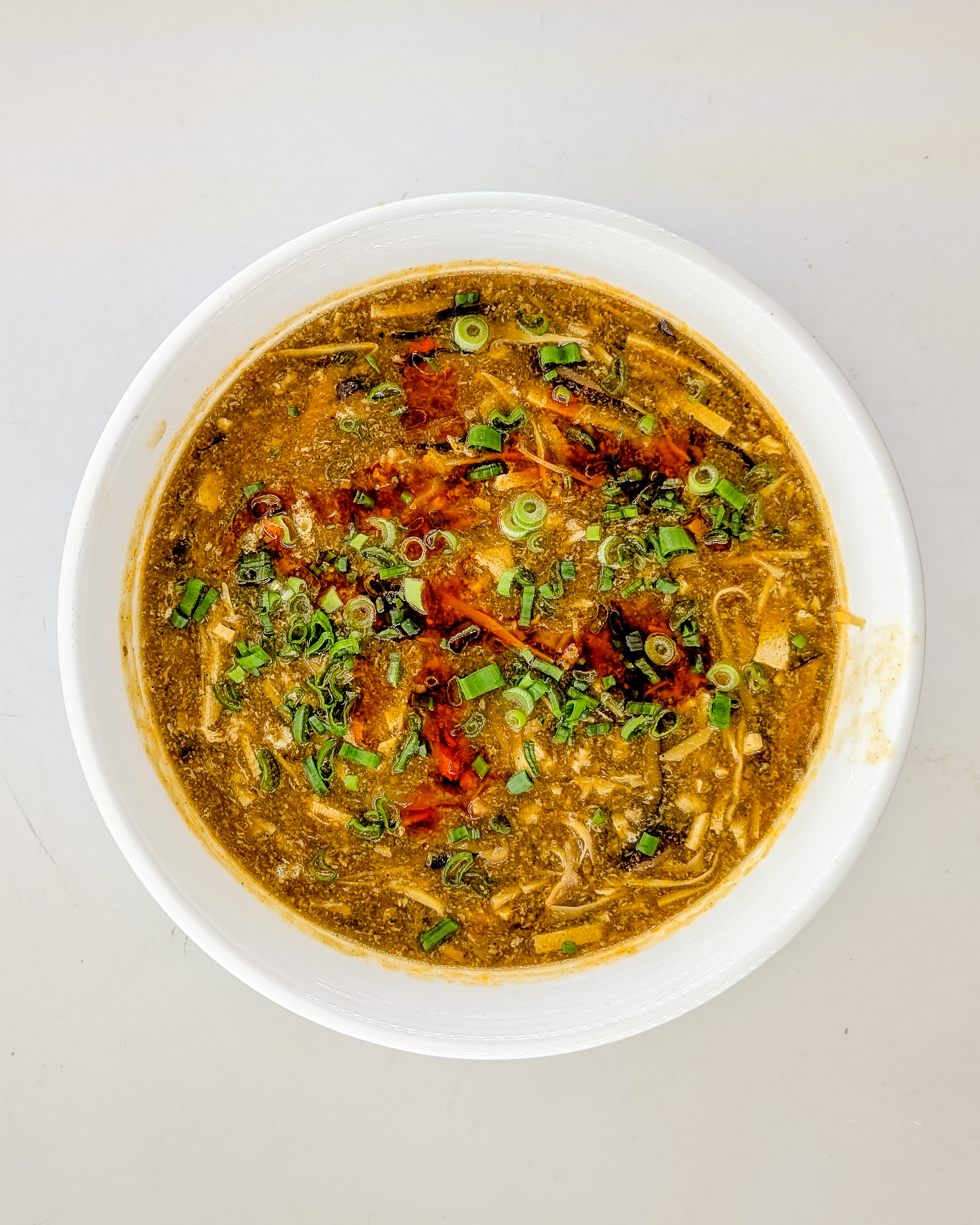
Hot and Sour Soup, known in Mandarin as Suan La Tang (酸辣汤), is one of the most iconic comfort dishes in Chinese cuisine. The bowl in the image reflects its classic form – rich brown broth, silky strands of egg, earthy mushrooms, tofu, bamboo shoots, and a generous scattering of spring onions. It is a dish loved for its bold flavour contrast and its ability to warm the body and awaken the palate.
How It Tastes
The beauty of Suan La Tang lies in its perfect balance of spice and acidity.
- The heat comes from white pepper or chili oil.
- The sour note comes from Chinese black vinegar.
- The broth is lightly thickened, giving it a smooth, velvety consistency.
- Tofu, mushrooms, and bamboo shoots add layers of texture, making every spoonful different and satisfying.
The final result tastes fiery, tangy, savory, smoky, and aromatic, all at once.
A Short Story of Its Origin
Suan La Tang dates back to Northern China, particularly around Beijing and Henan, where vinegar and pepper were everyday pantry staples. In ancient times, this soup was believed to warm the body during cold winter months and stimulate appetite. It was commonly cooked by farmers and laborers who needed nourishment after long days of work — simple ingredients, big flavour.
The earliest written references appear during the Qing Dynasty, when vinegar production became more standardized and accessible. Over the decades, the soup transitioned from a rustic household dish to a beloved restaurant staple.
How the Dish Has Evolved
Originally, Hot and Sour Soup contained only a handful of ingredients: vinegar, pepper, tofu, mushrooms, and stock. As Chinese cuisine spread across regions and continents, the recipe adapted:
- Pork, chicken, or shrimp were added for richer flavor.
- Chili oil became a more modern addition, enhancing color and spice.
- Western Chinese restaurants thickened the soup more heavily to match local tastes.
- Vegetarian and vegan versions became mainstream.
- Some Southeast Asian adaptations add fresh chilies or coriander for a local twist.
Despite these changes, the essence of Suan La Tang remains unmistakable — spicy, sour, comforting, and aromatic.
How It Is Served Today
Today, Suan La Tang is widely available in:
- Sichuan restaurants
- Cantonese dim sum places
- Chinese banquet menus
- Modern fusion kitchens
- Hawker stalls and family eateries
It is enjoyed as a starter, a warming main, and even as a “pick-me-up” meal when someone wants something comforting or stimulating.
Average Price in Singapore
- Hawker Centre / Casual Eateries: SGD 4 – 6
- Mid-range Restaurants: SGD 8 – 12
- Premium Chinese Restaurants: SGD 12 – 18
Recipe: Hot and Sour Soup (Suan La Tang)
Ingredients (Serves 2–3)
Main Ingredients
- 100 g tofu (silken or firm), cut into thin strips
- 50 g wood ear mushrooms, soaked and sliced
- 50 g shiitake mushrooms, sliced
- 30 g bamboo shoots, julienned
- 1 egg, lightly beaten
- 50 g shredded chicken or pork (optional)
Broth Seasoning
- 3 cups chicken or vegetable stock
- 2 tbsp light soy sauce
- 1–2 tbsp Chinese black vinegar
- 1 tsp white pepper
- ½ tsp chili oil or chili flakes
- 1 tsp sesame oil
Thickening Slurry
- 2 tbsp cornstarch + 2 tbsp water
Garnish
- Chopped spring onions
- Extra chili oil (optional)
Instructions
- Make the broth
Heat the stock in a pot until it reaches a gentle boil. - Add vegetables and protein
Add tofu, mushrooms, bamboo shoots, and shredded meat (if using). Simmer 3–4 minutes. - Season the soup
Add soy sauce, vinegar, white pepper, sesame oil, and chili oil. - Thicken the soup
Pour in the cornstarch slurry while stirring. Keep simmering until the soup becomes glossy and slightly thick. - Add egg ribbons
Slowly drizzle beaten egg in a circular motion to form silky threads. - Serve
Top with chopped spring onions and a drizzle of chili oil.