Tag: culinary student

The Golden Sweetness of Steamed Pumpkin Pudding (Khanom Fak Thong)

The Golden Sweetness of Steamed Pumpkin Pudding (Khanom Fak Thong)

When most people think of pumpkin desserts, they think of heavy autumn pies. But in Thailand, pumpkin is transformed into something delicate, chewy, and vibrant. This is Khanom Fak Thong, or Steamed Pumpkin Pudding. It is a dessert that perfectly captures the Thai philosophy of 

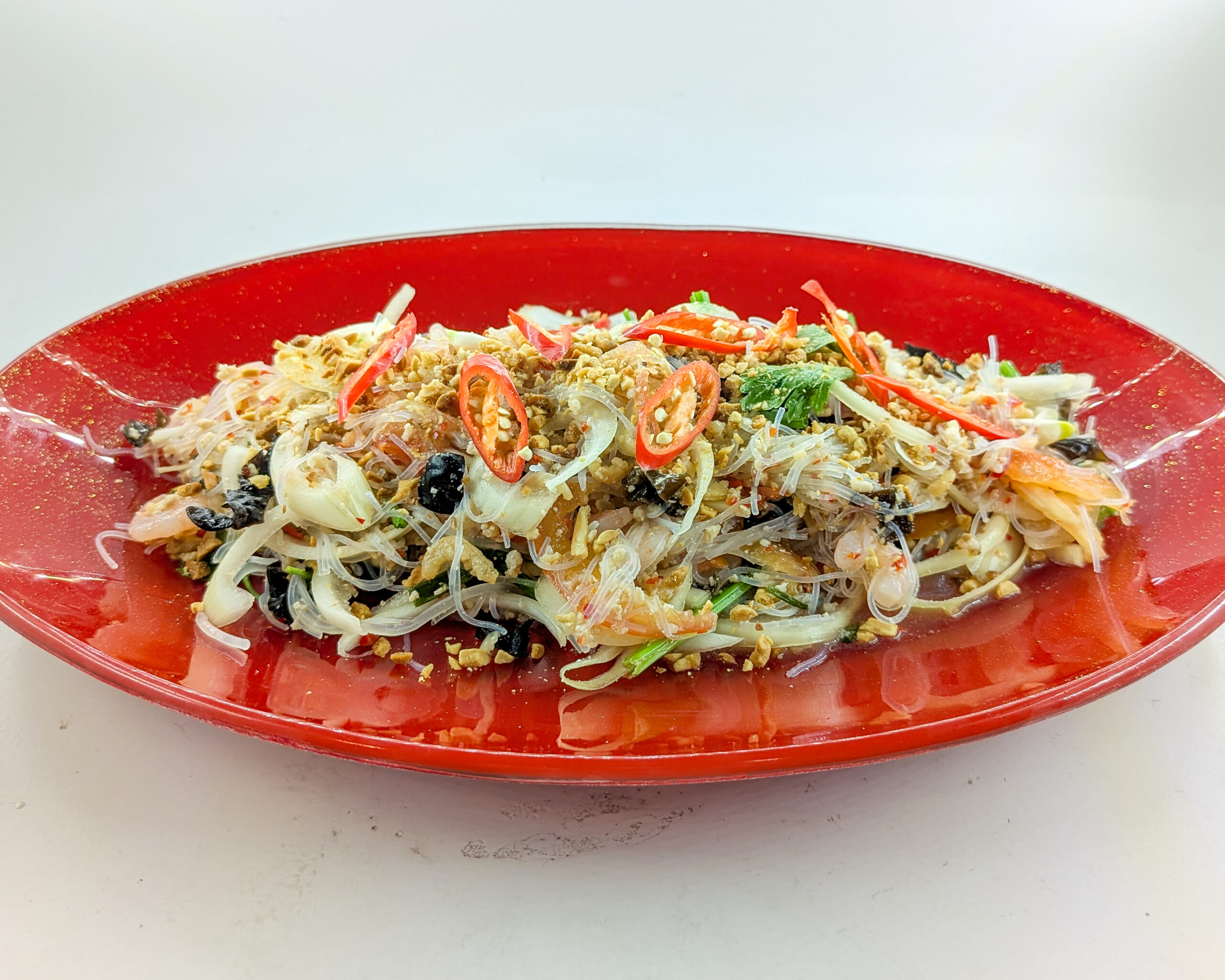
The Zesty Crunch of Spicy Mung Bean Noodle Salad (Yum Woon Sen)

The Zesty Crunch of Spicy Mung Bean Noodle Salad (Yum Woon Sen)

If you are looking for a dish that wakes up every single taste bud in your mouth, this is it. Spicy Mung Bean Noodle Salad, widely known in Thailand as Yum Woon Sen, is a vibrant explosion of textures and flavors. It is light, healthy, 

Estofado de Pollo: The Warm Hug You Can Eat

Estofado de Pollo: The Warm Hug You Can Eat

If there is one dish that defines “home cooking” across the Spanish-speaking world, it is Estofado de Pollo. This isn’t just a chicken stew; it is a masterclass in building flavor through patience. With its rich, tomato-based sauce, tender root vegetables, and aromatic spices, this dish is the culinary equivalent of a warm blanket on a cold day.

What is this dish?

Estofado de Pollo is a traditional chicken stew. The word estofado comes from the Spanish verb estofar, which essentially means to braise or stew meat in a closed vessel so it cooks in its own juices.

While recipes vary from Spain to Mexico to Peru, the core elements remain the same: bone-in chicken pieces browned for flavor, then simmered slowly with a “sofrito” (a base of onions, garlic, and tomatoes) and hearty chunks of potatoes and carrots. This specific version incorporates cumin and chili powder, giving it a lovely depth and warmth.

How It Tastes

The magic of this dish lies in the sauce. Because the chicken is cooked on the bone, the broth becomes rich and gelatinous, coating every vegetable.

  • The Flavor: It is savory and earthy. The sweetness of the cooked carrots and red onions balances the slight acidity of the tomatoes. The cumin adds a smoky, nutty undertone, while the chili powder provides a gentle warmth without necessarily being spicy-hot.
  • The Texture: The chicken becomes fall-off-the-bone tender. The potatoes act as sponges, absorbing the savory sauce, while the peas add a little pop of sweetness and texture at the end.

A Short Story of Its Origins

The technique of estofado has its roots in medieval Spanish cuisine. Originally, it was a way to make tougher cuts of meat palatable by cooking them slowly over low heat.

When Spanish explorers and settlers arrived in the Americas, they brought this technique with them. However, they adapted the dish to include ingredients native to the “New World,” specifically tomatoes and potatoes. This fusion created the version of Estofado de Pollo that is now a staple across Latin America and Spain.

Evolution From Past to Present

In the past, an estofado was strictly a peasant dish, often made with whatever vegetables were available in the garden and older hens that were no longer laying eggs (which required long cooking times to become tender).

As the dish evolved, it became more refined. The addition of specific spices like cumin and the deliberate layering of flavors—searing the meat first, then deglazing—turned it from a survival meal into a celebrated family tradition. In places like Peru, it might include aji panca peppers; in Spain, it might lean heavier on wine.

Where It Stands Today

Today, Estofado de Pollo stands as a pillar of comfort food. It is rarely found in high-end, molecular gastronomy restaurants because it defies “fancy” presentation—it is meant to be rustic and messy. However, it is a superstar in fondas (small family-run restaurants) and home kitchens globally. It is the go-to meal for Sunday family gatherings or for meal-prepping because it tastes even better the next day.

Average Price Today

This is one of the most economical dishes you can make, which is part of its enduring popularity.

  • Restaurants: If you find this in a casual Latin or Spanish bistro, expect to pay between $12.00 and $18.00 USD.
  • Home Cooking: It is incredibly budget-friendly. Using a whole chicken and root vegetables, you can feed a family of four for roughly $10.00 to $12.00 total.

Recipe: Estofado de Pollo (Chicken Stew)

Origin: Spain Serves: 4

Ingredients

The Protein & Veg:

  • 1 whole Chicken, cut into quarters
  • 300g Carrots, cut into large dice
  • 300g Potatoes, cut into large dice
  • 100g Frozen peas
  • 1 Red onion, diced
  • 3 Tomatoes, chopped

The Liquid & Aromatics:

  • 500ml Chicken Stock
  • 2 cloves Garlic, chopped
  • 30g Chili powder
  • 15g Cumin powder
  • Vegetable oil (as needed for frying)
  • Fresh Coriander, chopped (for garnish)

Seasoning:

  • Salt (to taste)
  • Pepper (to taste)

Instructions

1. Mise-en-place Start by preparing your workspace. Scale and measure all your ingredients. Chop your vegetables and quarter the chicken. Having everything ready makes the cooking process smooth.

2. Sear the Chicken In a large pot, heat the vegetable oil over medium-high heat. Season your chicken pieces and place them in the pot. Sear them until the skin is golden brown. You aren’t cooking them through yet, just building flavor. Remove the chicken from the pot and set aside.

3. Make the Base In the same pot (don’t clean it—keep those flavorful chicken juices!), add the diced onion, chopped garlic, tomatoes, cumin powder, and chili powder. Fry this mixture until the tomatoes start to break down and turn into a thick paste. This should smell amazing.

4. The Simmer Add the carrots, potatoes, chicken stock, and the seared chicken back into the pot. Bring the liquid to a boil, then reduce the heat to a simmer.

5. Cook Let it cook gently for about 25 minutes. You are looking for two things: the chicken should be cooked through, and the root vegetables (potatoes and carrots) should be soft and tender.

6. Finish Stir in the frozen peas during the last few minutes of cooking so they stay bright green. Taste the sauce and season with salt and pepper as needed.

7. Serve Garnish with fresh chopped coriander and serve hot. This dish pairs perfectly with steamed white rice to soak up that delicious sauce.

The Golden Comfort of Baked Onion Soup

The Golden Comfort of Baked Onion Soup

There is perhaps no soup in the world more satisfying to look at—and eat—than a properly made Baked Onion Soup, or Soupe à l’Oignon Gratinée. It is the definition of comfort: a deep, flavorful broth hiding beneath a cap of toasted bread and bubbling, browned 

The Smoky Comfort of Chicken Claypot Rice

The Smoky Comfort of Chicken Claypot Rice

There are few things in the culinary world as satisfying as lifting the heavy lid of a clay pot and being hit with a cloud of steam smelling of sesame oil, caramelized soy, and savory chicken. Chicken Claypot Rice, or Shā Guō Fàn, is the 

The Zesty Elegance of Chilled Lemon Soufflé

The Zesty Elegance of Chilled Lemon Soufflé

If you are looking for a dessert that screams sophistication but brings a refreshing chill to the table, look no further than the Chilled Lemon Soufflé (or Soufflé Froid Au Citron). Unlike its hot, temperamental cousin that deflates if you look at it the wrong way, this French classic is cool, composed, and absolutely delicious.

What is this dish?

A Chilled Lemon Soufflé is a deceptive masterpiece. While it carries the name “soufflé,” it is actually closer to a stabilized mousse or a set custard. It mimics the appearance of a hot soufflé – often rising above the rim of the glass or ramekin – but it achieves this lift through aeration (whipped cream) and setting agents rather than heat and egg whites. It serves as a light, airy finish to a meal, originating from the culinary traditions of France.

How It Tastes

Imagine the texture of a cloud that tastes like lemonade. This dish is the perfect balance of sweet and sour. The base is a rich lemon curd made silky with butter and eggs, while the folded-in whipped cream adds an airy lightness that melts in your mouth. The sharpness of the lemon zest cuts through the richness of the cream, leaving your palate feeling refreshed. When paired with strawberries, as in this recipe, you get a beautiful contrast of tart citrus and sweet, juicy berries.

A Short Story of Its Origins

The concept of the soufflé dates back to 18th-century France, but the cold soufflé (Soufflé Glacé or Froid) came later, popularized during the golden age of French haute cuisine. Chefs wanted to offer the visual drama of a soufflé without the last-minute stress of baking them during service. By using techniques similar to Bavarian cream or mousse, they created a dessert that could be prepared in advance but still looked like a magic trick on a plate.

Evolution From Past to Present

In the past, these dishes were strictly the domain of high-end restaurants, relying heavily on gelatin and complex Italian meringues to hold their shape. Over time, the recipe has evolved to be more approachable.

Modern variations, like the one below, often use stabilizers like custard powder (flan powder) or cornstarch to create a thick, stable base without needing sheets of gelatin. This shift has moved the dish from professional kitchens into home kitchens, where it is loved for its “make-ahead” convenience.

Where It Stands Today

Today, the Chilled Lemon Soufflé is a bistro favorite. It stands as a testament to timeless elegance—it doesn’t follow the trendy “deconstructed” dessert fad but rather relies on solid technique and bold flavors. It is particularly popular in the summer months when diners want something indulgent but not heavy.

Average Price Today

If you were to order this in a nice French bistro or restaurant, you can expect to pay between $9.00 and $16.00 USD. However, it is an incredibly cost-effective dessert to make at home. Since the primary ingredients are lemons, eggs, sugar, and cream, making a batch for four people at home would likely cost less than $8.00 total.


The Recipe: Chilled Lemon Soufflé with Strawberry Salad

Serves: 4 Origin: France

Ingredients

The Base Custard:

  • Juice and grated zest of 2 yellow lemons
  • 90g Sugar (divided use)
  • 60g Unsalted Butter
  • 2 Eggs
  • 5g Flan powder (or cornstarch/custard powder)
  • 100ml Heavy cream (liquid)

The Soufflé Mixture & Garnish:

  • 300g of the Base Custard mixture (prepared above)
  • 150ml Heavy cream (whipped)
  • 200g Strawberries, cut into quarters

Instructions

1. Prep the Station Start by gathering all your ingredients. Weigh everything out—baking is a science! Have your martini glasses or ramekins ready.

2. Start the Lemon Base In your first saucepan, combine the lemon juice, lemon zest, butter, and half of the sugar (45g). Bring this mixture to a boil.

3. Heat the Cream In a separate, second saucepan, bring the 100ml of liquid heavy cream to a boil.

4. Make the Egg Paste While the liquids are heating, grab a small mixing bowl. Beat together the remaining sugar (45g), the flan powder, and the 2 eggs until smooth.

5. Temper and Combine This step requires care. Pour the boiling cream (from step 3) into the egg mixture (step 4) while whisking constantly so the eggs don’t scramble. Once incorporated, pour this mix into the first saucepan containing the hot lemon and butter mixture.

6. Cook the Custard Whisking constantly, bring the combined mixture in the saucepan to a boil for a few seconds to thicken it. Strain the custard into a clean bowl to remove the zest and any lumps. Place this bowl over ice to cool it down quickly.

7. Fold and Fill Once the custard is completely cold, gently fold in the 150ml of whipped cream. Be gentle to keep the air in the mixture. Spoon the mixture into martini glasses.

8. Chill and Serve Refrigerate the glasses for a minimum of 1 hour to set. Serve topped with the quartered strawberries.

Red Wine Poached Egg Muffin with Hollandaise: A Bold Twist on Brunch Classics

Red Wine Poached Egg Muffin with Hollandaise: A Bold Twist on Brunch Classics

This dish is best named “Red Wine Poached Egg Muffin with Hollandaise” — a contemporary fusion brunch item combining French poaching technique, classic English muffin culture, and modern café-style plating. The vibrant purple hue of the egg, tinted by red wine, brings both visual drama 

Herb-Roasted Rack of Lamb with Couscous and Creamy Tzatziki

Herb-Roasted Rack of Lamb with Couscous and Creamy Tzatziki

This beautifully plated dish is known as Herb-Roasted Rack of Lamb with Couscous and Creamy Tzatziki – a Mediterranean-inspired plate that balances richness, freshness, and aromatic herbs. The lamb, cooked to a juicy medium-rare, carries deep savory notes highlighted by rosemary and roasted garlic, while 

A Comforting Classic: The Story Behind Beef Lasagna with Basil Pesto

A Comforting Classic: The Story Behind Beef Lasagna with Basil Pesto


This dish is best described as Classic Beef Lasagna served with a vibrant Basil Pesto, a modern twist on the well-loved Italian baked pasta. The golden, cheesy top paired with a rich meat layer and bright green pesto sauce creates a visually appealing and flavour-packed experience.

How It Tastes

Expect a harmonious blend of richness and freshness.

  • The lasagna itself is hearty, savoury, and creamy, thanks to layers of minced beef ragù, béchamel, and melted cheese.
  • The basil pesto brings a fresh, herby, and nutty brightness, cutting through the richness and adding a fragrant finish.
    Together, they create a satisfying dish that balances comfort with elegance.

A Short Story: Where This Dish Comes From

Lasagna originates from the Emilia-Romagna region of Italy, one of the world’s culinary capitals. Traditionally prepared with handmade pasta sheets, slow-cooked ragù, béchamel, and Parmigiano-Reggiano, it was considered a celebratory dish for families during festivities or gatherings.

Over centuries, lasagna evolved beyond regional borders:

  • The earliest recipes date back to the 14th century, where it was mentioned in medieval Italian manuscripts.
  • As it spread across Europe and America, versions with ricotta, different meats, and even vegetables emerged.

The addition of basil pesto is a contemporary adaptation, influenced by Ligurian cuisine—particularly from Genoa, the birthplace of pesto. Modern chefs often use pesto to introduce freshness and a visual contrast to the heavier lasagna profile.


How It Has Changed Over Time

Originally, lasagna used:

  • Hand-rolled pasta sheets
  • Beef and pork ragù simmered for hours
  • Fresh milk béchamel

Today, variations include:

  • Vegetarian lasagna
  • Seafood lasagna
  • Gluten-free pasta sheets
  • Cheese-rich American-style lasagna
  • Modern plating using pesto, tomato coulis, or herb oils

Your version—with pesto as the surrounding sauce—is an example of the modern, refined plating trend, focusing on flavour contrast and simplicity.


Current Popularity and Price Range

Lasagna remains one of the most beloved Italian comfort foods globally. It appears in:

  • Trattorias
  • Western cafés
  • High-end Italian restaurants
  • Home kitchens

In 2025, the average price of beef lasagna varies by setting:

  • Cafés: SGD 10–15
  • Casual Italian restaurants: SGD 16–22
  • Premium dining / gourmet versions: SGD 24–35

With pesto added as a gourmet touch, this dish would typically fall in the SGD 18–26 range.


Recipe: Classic Beef Lasagna with Basil Pesto

Ingredients

For the Beef Ragù

  • 400g minced beef
  • 1 onion, finely chopped
  • 2 garlic cloves, minced
  • 1 carrot, diced
  • 1 celery stalk, diced
  • 400g crushed tomatoes
  • 2 tbsp tomato paste
  • 1 tsp dried oregano
  • 1 tsp dried basil
  • Salt & pepper to taste
  • 2 tbsp olive oil

For the Béchamel Sauce

  • 40g butter
  • 40g flour
  • 450ml milk
  • Salt & nutmeg to taste

Other Ingredients

  • Lasagna sheets (fresh or dried)
  • 150g mozzarella cheese (shredded)
  • 40g grated Parmesan
  • Fresh basil leaves (optional)

For the Basil Pesto

  • 1 cup fresh basil leaves
  • 2 tbsp pine nuts or cashews
  • 1 clove garlic
  • 40g Parmesan cheese
  • 60ml olive oil
  • Salt to taste

Instructions

1. Cook the Ragù

  1. Heat olive oil in a pan and sauté onion, carrot, celery until soft.
  2. Add garlic and cook 1 minute.
  3. Add minced beef; cook until browned.
  4. Add tomato paste, crushed tomatoes, herbs, salt, and pepper.
  5. Simmer for 25–30 minutes until thick and flavourful.

2. Prepare the Béchamel

  1. Melt butter in a saucepan.
  2. Add flour and stir to form a roux.
  3. Slowly whisk in milk until smooth.
  4. Simmer until thickened; season with salt and nutmeg.

3. Make the Pesto

Blend basil, garlic, nuts, Parmesan, and olive oil until smooth. Season to taste.

4. Assemble the Lasagna

  1. Spread a thin layer of ragù in a baking dish.
  2. Add lasagna sheets.
  3. Add ragù, béchamel, and cheese.
  4. Repeat layers 3–4 times.
  5. Finish with béchamel and a generous sprinkle of cheese.

5. Bake

  • Bake at 180°C for 35–40 minutes until golden and bubbling.
  • Rest for 10 minutes before slicing.

6. Serve

Place a ladle of basil pesto on the plate and set a slice of lasagna on top. Garnish with more Parmesan if desired.

Beef Bourguignon Medallion: A French Classic in Modern Elegance

Beef Bourguignon Medallion: A French Classic in Modern Elegance

The dish is Beef Bourguignon Medallion — a refined, modern presentation of the legendary French Boeuf Bourguignon, traditionally known as a rustic Burgundy beef stew. In this contemporary plated form, the beef is shaped into a compact medallion and served with a glossy, deeply flavoured