
Shrimp–Avocado Timbale with Mango Coulis
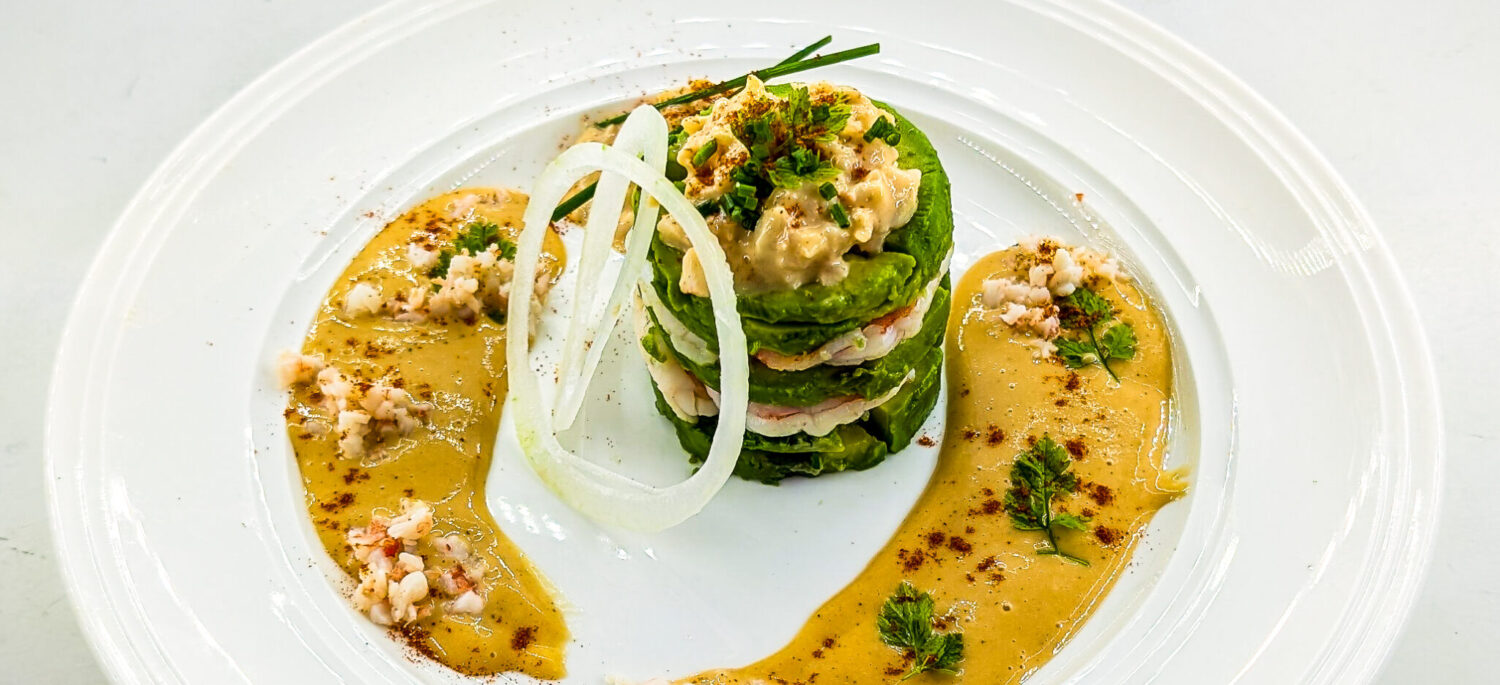
Shrimp-Avocado Timbale with Mango Coulis -a refreshing, elegant, layered cold appetizer that balances creaminess, sweetness, acidity, and subtle spice. The tower is built with alternating layers of mashed or sliced avocado and lightly seasoned shrimp salad, shaped into a neat timbale. It is surrounded by a smooth mango coulis, dotted with shrimp crumbs, herbs, and a touch of paprika for color and aroma.
How It Tastes
This timbale is fresh, creamy, and vibrant.
Avocado provides buttery richness, while the shrimp brings mild sweetness and a slightly briny bite. The mango coulis adds a tropical acidity that lifts the dish, creating a bright contrast. Onion curls and herbs offer crunchy aromatics, balancing the smooth textures. Each spoonful is light yet flavorful, perfect as an appetizer or a fine-dining tasting portion.
Short History & Origin
Timbale-style dishes originally come from French culinary tradition, where food is shaped using a mold to create height and elegance. Over time, modern chefs around the world adapted the timbale concept into fresh, chilled creations-especially using avocado and seafood.
The avocado–shrimp pairing gained popularity in California cuisine in the 1980s, when lighter, fruit-forward dishes became the trend. Mango sauces were later introduced by Latin-American and Southeast Asian influences, giving the dish a more global identity.
How the Dish Evolved
Originally, timbales were often baked, filled with savory custards or grains. Today, the modern reinterpretation is raw or lightly cooked, focusing on clean flavors and natural colors. Chefs now pair the ingredients with tropical fruits, micro herbs, edible flowers, and artistic plating—exactly like the contemporary style seen on your plate.
Current Status
Right now, this dish is frequently featured in:
- modern European restaurants
- hotel brunch buffets
- upscale gastro cafés
- culinary school assessments
It represents refinement, technique, and the ability to combine flavors across cultures—a perfect showpiece for a culinary student showcasing creativity.
Average Price
Depending on setting and ingredients, this dish usually ranges from:
- SGD $14 – $22 in cafés
- SGD $22 – $35 in restaurants or hotels
- SGD $8 – $12 in a culinary school showcase or tasting event
RECIPE: Shrimp–Avocado Timbale with Mango Coulis
Ingredients (2 portions)
For the Shrimp Filling
- 150 g cooked shrimp, finely chopped
- 1–2 tbsp mayonnaise
- ½ tsp Dijon mustard
- ½ tsp lemon juice
- Pinch of paprika
- Pinch of salt & pepper
- Optional: chopped chives or parsley
For the Avocado Layer
- 2 ripe avocados
- 1 tsp lemon juice
- Pinch of salt
- Pinch of black pepper
For the Mango Coulis
- 1 ripe mango, diced
- 1 tbsp lime or lemon juice
- ½ tsp honey (optional)
- 1–2 tbsp water (to adjust thickness)
- Pinch of chili flakes or paprika
Garnish
- Onion curls or thin rings
- Micro herbs / parsley
- Extra minced shrimp
- Light dusting of paprika
Instructions
1. Prepare the Mango Coulis
- Blend mango, lime juice, honey, and water until smooth.
- Adjust thickness—coulis should be slightly thick but pourable.
- Season with chili flakes or paprika.
2. Prepare the Shrimp Salad
- Combine chopped shrimp with mayo, Dijon, lemon juice, salt, pepper, and herbs.
- Mix until creamy but not runny.
- Chill for at least 10 minutes.
3. Prepare the Avocado
- Mash avocado gently with lemon juice, salt, and pepper.
Alternatively: slice avocado into thin rounds if you want neat layers.
4. Assemble the Timbale
- Use a metal ring mold.
- Layer:
- Avocado
- Shrimp
- Avocado
- Shrimp
- Top with a final avocado layer
- Press lightly so it holds its shape.
5. Plating
- Place the timbale in the center of the plate.
- Spoon mango coulis around it in a crescent moon or artistic sweep.
- Sprinkle bits of minced shrimp and herbs.
- Dust lightly with paprika.
- Finish with onion curls on top.