Month: November 2025

The Zesty Elegance of Chilled Lemon Soufflé

The Zesty Elegance of Chilled Lemon Soufflé

If you are looking for a dessert that screams sophistication but brings a refreshing chill to the table, look no further than the Chilled Lemon Soufflé (or Soufflé Froid Au Citron). Unlike its hot, temperamental cousin that deflates if you look at it the wrong 

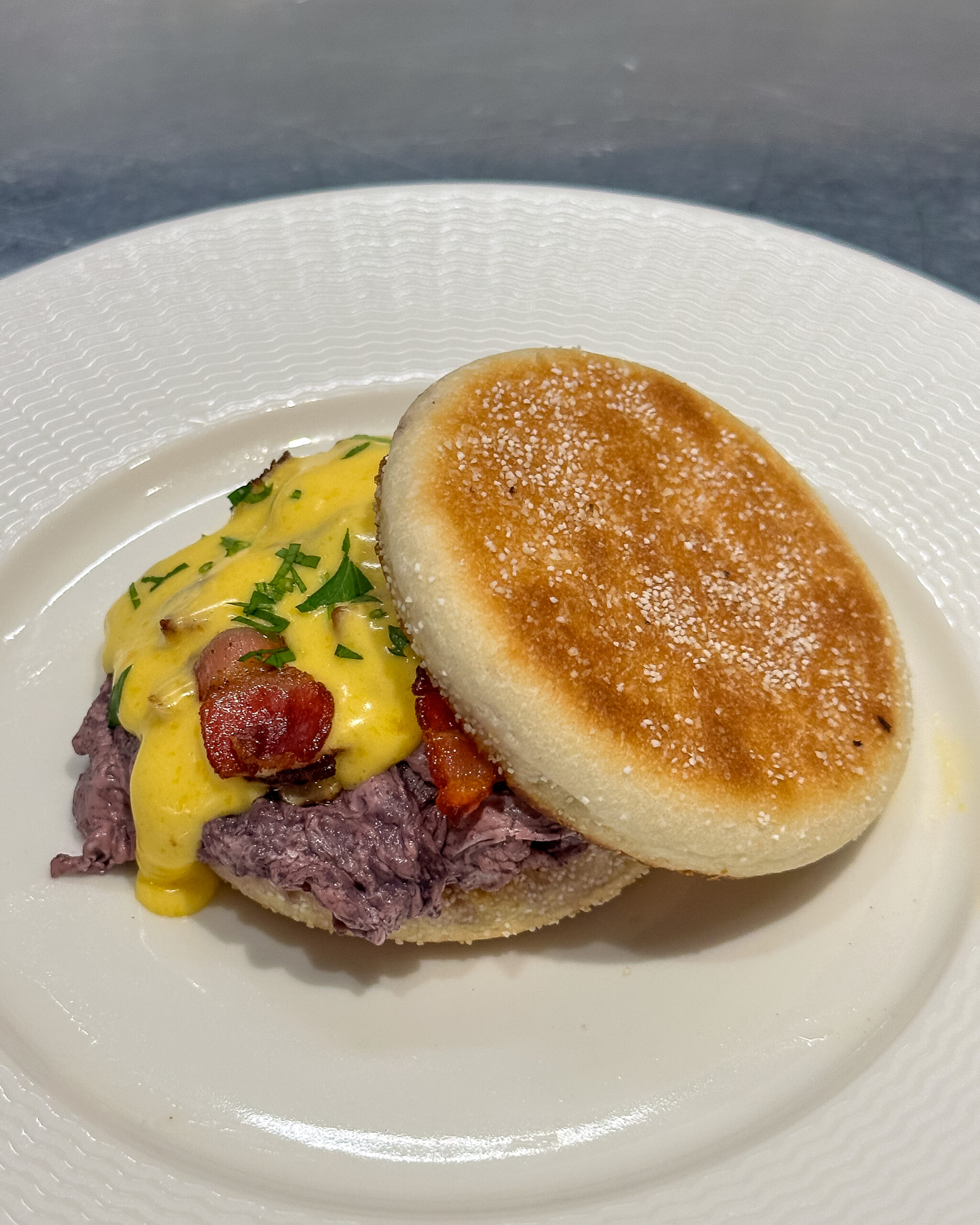
Red Wine Poached Egg Muffin with Hollandaise: A Bold Twist on Brunch Classics

Red Wine Poached Egg Muffin with Hollandaise: A Bold Twist on Brunch Classics

This dish is best named “Red Wine Poached Egg Muffin with Hollandaise” — a contemporary fusion brunch item combining French poaching technique, classic English muffin culture, and modern café-style plating. The vibrant purple hue of the egg, tinted by red wine, brings both visual drama 

Herb-Roasted Rack of Lamb with Couscous and Creamy Tzatziki

Herb-Roasted Rack of Lamb with Couscous and Creamy Tzatziki


This beautifully plated dish is known as Herb-Roasted Rack of Lamb with Couscous and Creamy Tzatziki – a Mediterranean-inspired plate that balances richness, freshness, and aromatic herbs. The lamb, cooked to a juicy medium-rare, carries deep savory notes highlighted by rosemary and roasted garlic, while the fluffy couscous and cooling tzatziki add contrast and brightness.

How It Tastes

The lamb is tender, slightly gamey, and full of umami, enriched by the perfume of rosemary and the caramelized sweetness of roasted garlic. The couscous offers a light, fluffy texture with subtle seasoning, absorbing the juices from the lamb. The tzatziki brings tang, creaminess, and refreshing herb notes – making every bite well-balanced and vibrant.

A Short Story of Where This Dish Comes From

Rack of lamb has its roots deeply tied to French and Mediterranean cuisine, often associated with fine dining and celebratory meals. Historically, lamb was prepared simply—rubbed with salt, pepper, and herbs, then roasted over fire. Over time, as trade and culinary exchange flourished, lamb began appearing alongside ingredients like couscous, a staple of North African cuisine, and tzatziki, a Greek yogurt-cucumber sauce.

This modern combination reflects the blending of Mediterranean regions:

  • French cooking technique for lamb
  • North African couscous
  • Greek-style tzatziki

It’s a dish that evolved from rustic roots into a contemporary, elegant main course served across high-end restaurants worldwide.

How the Dish Has Changed Over Time

Originally, lamb dishes were heavier – served with rich gravies or root vegetables. Today, chefs prefer lighter, fresher accompaniments to balance the richness of lamb. Couscous introduces airiness, while tzatziki adds acidity and freshness, aligning with modern preferences for healthier, balanced plates. Techniques have also refined over time, ensuring precise doneness, better crust formation, and cleaner flavor profiles.

How It Is Served Nowadays

In modern restaurants, this dish is often plated as:

  • A single or double lamb cutlet
  • Rested over fluffy couscous
  • Paired with a fresh yogurt-herb sauce
  • Garnished with herbs such as rosemary or thyme

It’s a favorite in Mediterranean bistros, hotel restaurants, and fine-dining establishments.

Average Price Today

Depending on the type of restaurant and region, the average cost for this dish is:

  • Casual Mediterranean restaurant: SGD 25–35
  • Mid-range Western/Mediterranean dining: SGD 38–55
  • Fine dining or hotel restaurants: SGD 60–85

High-quality lamb racks significantly influence pricing.


Recipe: Herb-Roasted Rack of Lamb with Couscous and Tzatziki

Ingredients

For the Lamb

  • 1 rack of lamb (6–8 bones), frenched
  • 2 tbsp olive oil
  • 4 cloves garlic, crushed
  • 2–3 sprigs rosemary
  • Salt & black pepper

For the Couscous

  • 1 cup couscous
  • 1 cup hot chicken stock or water
  • 1 tbsp olive oil
  • 1 tbsp butter
  • 1 tbsp finely diced onion or tomato (optional)
  • Salt & pepper

For the Tzatziki

  • 1 cup Greek yogurt
  • ½ cucumber, grated and squeezed dry
  • 1 clove garlic, minced
  • 1 tbsp lemon juice
  • 1 tbsp chopped dill or mint
  • Salt & pepper

Instructions

1. Prepare the Lamb

  1. Preheat oven to 200°C.
  2. Season the rack of lamb generously with salt and pepper.
  3. Heat oil in a pan and sear the lamb on all sides until browned.
  4. Add crushed garlic and rosemary during the final minute of searing.
  5. Transfer to oven and roast for 15–18 minutes for medium-rare.
  6. Let rest 10 minutes before slicing.

2. Prepare the Couscous

  1. Place couscous in a bowl and add olive oil and a pinch of salt.
  2. Pour in hot stock, cover, and let sit for 5 minutes.
  3. Fluff with fork and mix in butter and diced vegetables.

3. Make the Tzatziki

  1. Mix yogurt, grated cucumber, garlic, lemon juice, dill, salt, and pepper.
  2. Chill for at least 10 minutes.

4. Assemble

  1. Spoon tzatziki onto the plate.
  2. Add a generous portion of couscous.
  3. Place sliced lamb cutlets on top.
  4. Garnish with roasted garlic and rosemary.
A Comforting Classic: The Story Behind Beef Lasagna with Basil Pesto

A Comforting Classic: The Story Behind Beef Lasagna with Basil Pesto

This dish is best described as Classic Beef Lasagna served with a vibrant Basil Pesto, a modern twist on the well-loved Italian baked pasta. The golden, cheesy top paired with a rich meat layer and bright green pesto sauce creates a visually appealing and flavour-packed 

Beef Bourguignon Medallion: A French Classic in Modern Elegance

Beef Bourguignon Medallion: A French Classic in Modern Elegance

The dish is Beef Bourguignon Medallion — a refined, modern presentation of the legendary French Boeuf Bourguignon, traditionally known as a rustic Burgundy beef stew. In this contemporary plated form, the beef is shaped into a compact medallion and served with a glossy, deeply flavoured 

The Fiery and Tangy Delight: A Deep Dive into Hot and Sour Soup (Suan La Tang)

The Fiery and Tangy Delight: A Deep Dive into Hot and Sour Soup (Suan La Tang)


Hot and Sour Soup, known in Mandarin as Suan La Tang (酸辣汤), is one of the most iconic comfort dishes in Chinese cuisine. The bowl in the image reflects its classic form – rich brown broth, silky strands of egg, earthy mushrooms, tofu, bamboo shoots, and a generous scattering of spring onions. It is a dish loved for its bold flavour contrast and its ability to warm the body and awaken the palate.


How It Tastes

The beauty of Suan La Tang lies in its perfect balance of spice and acidity.

  • The heat comes from white pepper or chili oil.
  • The sour note comes from Chinese black vinegar.
  • The broth is lightly thickened, giving it a smooth, velvety consistency.
  • Tofu, mushrooms, and bamboo shoots add layers of texture, making every spoonful different and satisfying.

The final result tastes fiery, tangy, savory, smoky, and aromatic, all at once.


A Short Story of Its Origin

Suan La Tang dates back to Northern China, particularly around Beijing and Henan, where vinegar and pepper were everyday pantry staples. In ancient times, this soup was believed to warm the body during cold winter months and stimulate appetite. It was commonly cooked by farmers and laborers who needed nourishment after long days of work — simple ingredients, big flavour.

The earliest written references appear during the Qing Dynasty, when vinegar production became more standardized and accessible. Over the decades, the soup transitioned from a rustic household dish to a beloved restaurant staple.


How the Dish Has Evolved

Originally, Hot and Sour Soup contained only a handful of ingredients: vinegar, pepper, tofu, mushrooms, and stock. As Chinese cuisine spread across regions and continents, the recipe adapted:

  • Pork, chicken, or shrimp were added for richer flavor.
  • Chili oil became a more modern addition, enhancing color and spice.
  • Western Chinese restaurants thickened the soup more heavily to match local tastes.
  • Vegetarian and vegan versions became mainstream.
  • Some Southeast Asian adaptations add fresh chilies or coriander for a local twist.

Despite these changes, the essence of Suan La Tang remains unmistakable — spicy, sour, comforting, and aromatic.


How It Is Served Today

Today, Suan La Tang is widely available in:

  • Sichuan restaurants
  • Cantonese dim sum places
  • Chinese banquet menus
  • Modern fusion kitchens
  • Hawker stalls and family eateries

It is enjoyed as a starter, a warming main, and even as a “pick-me-up” meal when someone wants something comforting or stimulating.

Average Price in Singapore

  • Hawker Centre / Casual Eateries: SGD 4 – 6
  • Mid-range Restaurants: SGD 8 – 12
  • Premium Chinese Restaurants: SGD 12 – 18

Recipe: Hot and Sour Soup (Suan La Tang)

Ingredients (Serves 2–3)

Main Ingredients

  • 100 g tofu (silken or firm), cut into thin strips
  • 50 g wood ear mushrooms, soaked and sliced
  • 50 g shiitake mushrooms, sliced
  • 30 g bamboo shoots, julienned
  • 1 egg, lightly beaten
  • 50 g shredded chicken or pork (optional)

Broth Seasoning

  • 3 cups chicken or vegetable stock
  • 2 tbsp light soy sauce
  • 1–2 tbsp Chinese black vinegar
  • 1 tsp white pepper
  • ½ tsp chili oil or chili flakes
  • 1 tsp sesame oil

Thickening Slurry

  • 2 tbsp cornstarch + 2 tbsp water

Garnish

  • Chopped spring onions
  • Extra chili oil (optional)

Instructions

  1. Make the broth
    Heat the stock in a pot until it reaches a gentle boil.
  2. Add vegetables and protein
    Add tofu, mushrooms, bamboo shoots, and shredded meat (if using). Simmer 3–4 minutes.
  3. Season the soup
    Add soy sauce, vinegar, white pepper, sesame oil, and chili oil.
  4. Thicken the soup
    Pour in the cornstarch slurry while stirring. Keep simmering until the soup becomes glossy and slightly thick.
  5. Add egg ribbons
    Slowly drizzle beaten egg in a circular motion to form silky threads.
  6. Serve
    Top with chopped spring onions and a drizzle of chili oil.

Laab Gai (Thai Spicy Chicken Herb Salad)

Laab Gai (Thai Spicy Chicken Herb Salad)

Laab Gai is a classic Thai chicken salad celebrated for its bold, vibrant, and refreshing profile. The dish is typically made with chopped or shredded chicken tossed in a lively mixture of lime juice, fish sauce, chili flakes, toasted rice powder, onions, herbs, and sometimes 

Teochew – Style Fish Soup

Teochew – Style Fish Soup

This comforting bowl appears to be Teochew-Style Fish Soup, a beloved staple in Singapore and Malaysia. The soup is typically light, milky, and savory, featuring sliced white fish, prawns, tofu, seaweed, and chopped spring onions—very similar to what is shown in the image. What This 

Thai Green Curry (Gaeng Keow Wan): A Bowl of Fragrant Heat and Heritage

Thai Green Curry (Gaeng Keow Wan): A Bowl of Fragrant Heat and Heritage


This is Thai Green Curry, known locally as Gaeng Keow Wan. Recognized instantly by its vibrant green hue, silky coconut base, and pops of red chili and basil, this classic Thai curry is beloved for its creamy, spicy, fragrant, and slightly sweet profile. The balance of green chili heat, aromatic herbs, and rich coconut milk creates a flavour that is bold yet comforting—perfect with steamed jasmine rice.

Where This Dish Comes From

Green curry originated in Central Thailand during the early 20th century. Thai cooks crafted it by blending fresh green chilies with galangal, lemongrass, garlic, kaffir lime peel, and other garden herbs, resulting in a curry that is lighter and brighter than its red and yellow counterparts. The name “green curry” refers to the color of the chilies, not necessarily the spice level—though it can be fiery depending on the cook.

How It Has Evolved

Traditionally, the curry was made with homemade paste pounded in a mortar, using whatever herbs were in season. Local vegetables like pea eggplants and Thai basil were key ingredients.

Over time, the world has adapted green curry in creative ways:

  • Restaurants often add chicken, beef, seafood, or plant-based proteins.
  • Some modern versions use milder chilies for a more global-friendly heat.
  • Variants with added sweetness, thicker broth, or fusion styles (green curry pasta, green curry ramen) have emerged.

Despite these changes, the heart of the dish—fragrant herb paste + coconut richness + spicy green chili aroma—remains sacred.

How It Is Served Today

Today, green curry is a culinary ambassador for Thailand. You’ll find it everywhere:

  • Thai family kitchens
  • Street food stalls
  • Casual eateries
  • Upscale restaurants around the world

In Singapore and Malaysia, it’s a popular choice for lunch sets or rice bowls.

Average Price

Depending on the venue:

  • Hawker / casual Thai eateries: SGD 7–12 per portion
  • Mid-range restaurants: SGD 12–18
  • Upscale dining: SGD 20–30

Prices vary based on protein type and location.


Recipe: Thai Green Curry (Gaeng Keow Wan)

Servings: 3–4

Ingredients

For the curry

  • 300 g chicken thigh, bite-sized
  • 400 ml coconut milk
  • 200 ml water or stock
  • 1 tbsp cooking oil
  • 80–100 g green curry paste (store-bought or homemade)
  • 1 tbsp fish sauce
  • 1 tsp palm sugar (or brown sugar)
  • 4–5 kaffir lime leaves
  • A handful of Thai basil leaves
  • 1–2 red chilies, sliced (for garnish)
  • 100 g eggplant or Thai pea eggplant
  • 1 small onion or 4–5 baby eggplants, halved

For homemade green curry paste (optional)

  • 6–8 green chilies
  • 2 cloves garlic
  • 1 small shallot
  • 1 thumb-size galangal
  • 1 stalk lemongrass
  • 1 tsp coriander seeds
  • 1 tsp cumin
  • 1 handful coriander stems
  • Zest of 1 kaffir lime
  • 1 tbsp shrimp paste

Method

  1. Prepare the paste (if homemade):
    Pound all paste ingredients in a mortar or blend until smooth.
  2. Start the curry:
    Heat oil in a pot. Add green curry paste and sauté until aromatic.
  3. Add coconut milk:
    Pour half of the coconut milk and let it simmer until the color deepens.
  4. Add chicken:
    Stir in chicken pieces and cook until slightly firm.
  5. Add vegetables:
    Add eggplants and kaffir lime leaves; pour the rest of the coconut milk and water/stock.
  6. Season:
    Adjust with fish sauce and palm sugar. Simmer gently until chicken is cooked and vegetables soften.
  7. Finish:
    Add Thai basil leaves. Turn off heat and garnish with red chili slices.
  8. Serve:
    Best enjoyed with steamed jasmine rice.
Mee Rebus – A Classic Southeast Asian Comfort Bowl

Mee Rebus – A Classic Southeast Asian Comfort Bowl

This is Mee Rebus, a beloved Southeast Asian noodle dish famous in Malaysia, Singapore, Indonesia, and Brunei. Its name simply means “boiled noodles”, but the experience is far richer than the literal translation. How It Tastes Mee Rebus is known for its thick, sweet-savory gravy