There are few things in the culinary world as satisfying as lifting the heavy lid of a clay pot and being hit with a cloud of steam smelling of sesame oil, caramelized soy, and savory chicken. Chicken Claypot Rice, or Shā Guō Fàn, is the ultimate one-pot meal. It is a dish that demands patience, but rewards you with one of the best textures in Chinese cuisine: crispy, scorched rice.
What is this dish?
Chicken Claypot Rice is a traditional Cantonese dish that is exactly what it sounds like: rice cooked with marinated chicken and other ingredients inside a clay pot. However, the pot isn’t just a serving vessel; it is the primary cooking tool. The porous nature of the clay allows heat to circulate evenly and slowly, cooking the rice to fluffy perfection while the bottom layer toasts against the hot surface.
In this version, we combine tender marinated chicken, savory Chinese sausage (lap cheong), earthy shiitake mushrooms, and a punch of salted fish to create a complex, hearty meal.
How It Tastes
The flavor profile of this dish is a deep, savory umami bomb. The rice absorbs the oils and juices from the chicken and sausages as they cook, meaning every grain is packed with flavor.
- The Texture: It is a game of contrasts. The rice in the middle is fluffy and soft, while the rice touching the pot becomes the fan jiu—a golden, crunchy crust that is often considered the best part of the meal.
- The Taste: The sweetness of the Chinese sausage balances the sharp, funky saltiness of the salted fish. The dark soy sauce adds a caramel-like richness, while the ginger and Shaoxing wine cut through the heaviness with aromatic warmth.
A Short Story of Its Origins
This dish hails from the Guangdong province in Southern China. Historically, it was a practical dish for working-class families. A clay pot was an inexpensive utensil that could withstand the high heat of an open charcoal fire. By cooking the rice and the meat together in one vessel, families could save on fuel and time.
Originally, it was strictly a winter dish. The clay pot retains heat for a long time, ensuring that the food stayed piping hot throughout the meal, even in drafty homes or open-air stalls.
Evolution From Past to Present
In the past, the cooking method was strictly charcoal. The chef would fan the embers to control the heat, giving the rice a distinct smoky aroma known as wok hei.
As the dish moved from village homes to bustling cities like Hong Kong, Singapore, and Kuala Lumpur, the cooking methods evolved. Today, while some traditional hawkers still use charcoal (and command long lines for it), many use gas stoves for consistency and speed. The ingredients have also evolved; while chicken and sausage are standard, luxury versions might include cured duck leg, liver sausage, or even abalone.
Where It Stands Today
Today, Chicken Claypot Rice is a beloved staple in Southeast Asian hawker centers and Cantonese restaurants worldwide. It is no longer just “survival cooking”; it is a celebrated culinary art form. It brings people together—it is almost always eaten communally, with diners scraping the bottom of the pot to share the coveted crispy rice.
Average Price Today
The price of this dish varies depending on whether you are eating at a street stall or a sit-down restaurant.
- Hawker Centers/Street Food: You can expect to pay between $5.00 and $10.00 USD.
- Restaurants: For larger portions with premium ingredients in a comfortable setting, the price ranges from $12.00 to $25.00 USD.
Recipe: Traditional Chicken Claypot Rice
Cuisine: Chinese Serves: 2
Ingredients
The Main Items:
- 150g Jasmine rice
- 100g Chicken, cut into cubes
- 30g Chinese sausages (Lap Cheong), sliced diagonally
- 1 no. Shitake mushroom, soaked and sliced
- 10g Salted fish, sliced thinly
- 10g Ginger, sliced thinly
- 1 no. Garlic, chopped
- 175g Water (for cooking rice)
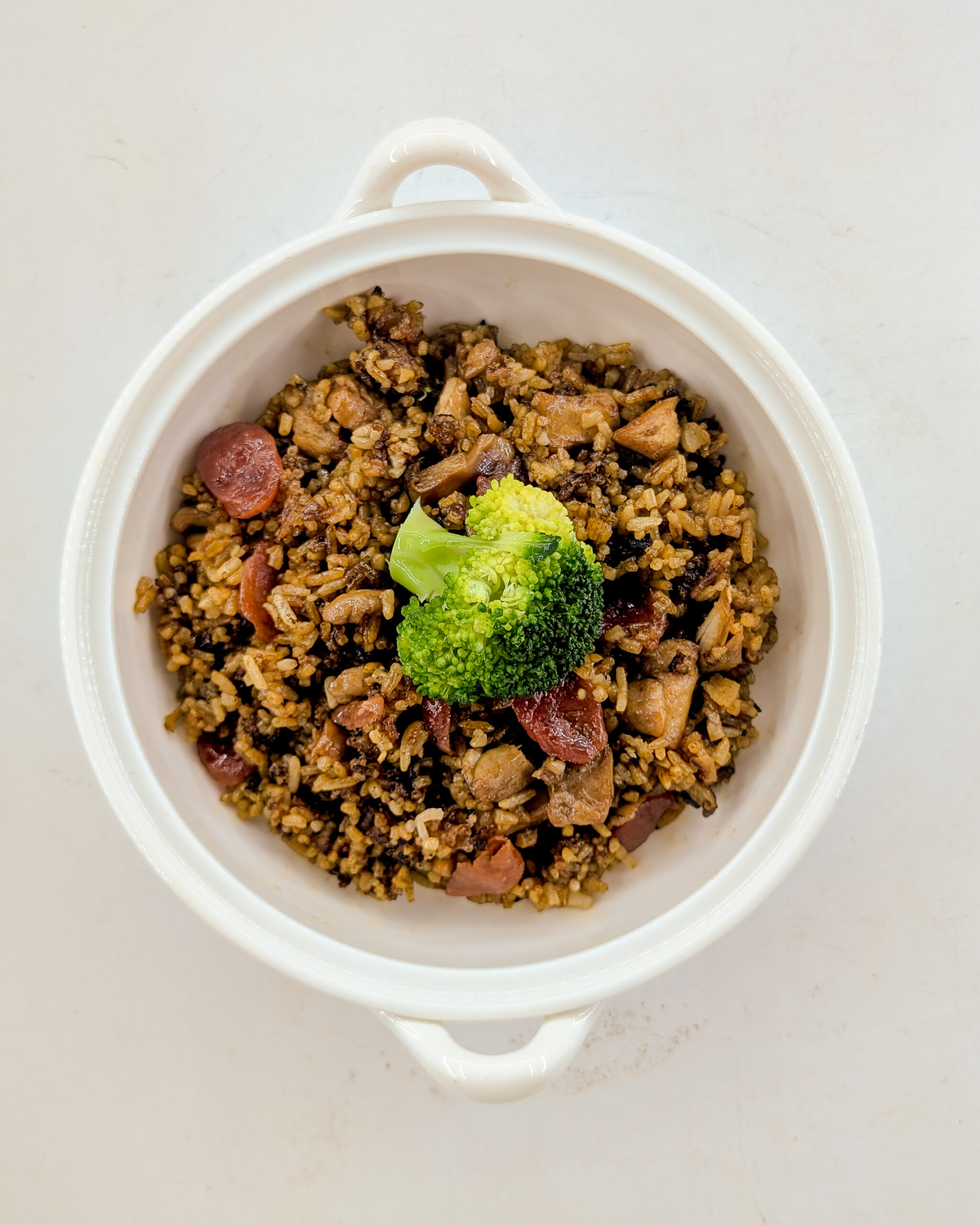
- Vegetables for Garnish: Spring onion (chopped) or blanched broccoli (as seen in the photo)
The Marinade (for the chicken):
- 1 Tbsp Oyster sauce
- ½ Tbsp Dark soy sauce
- White pepper powder (to taste)
The Seasonings & Oils:
- 3 Tbsp Chinese cooking wine (Shaoxing)
- 2 Tbsp Dark soy sauce
- 2 Tbsp Cooking oil (plus extra for frying)
- 1 Tbsp Sesame oil
- Salt (to taste)
Instructions
1. Marinate the Chicken Place your chicken cubes in a bowl. Add the oyster sauce, ½ tbsp dark soy sauce, and white pepper. Mix well and refrigerate for 30 minutes to let the flavors penetrate the meat.
2. Prep the Rice Soak the jasmine rice in water for 20 minutes. This helps the rice cook evenly. Strain and set aside.
3. Fry the Meats In a pan (or your clay pot if you want to build flavor there), add oil and stir-fry the Chinese sausages until they are cooked and slightly rendered. Remove and set aside. In the same oil, fry the salted fish until crispy. Remove and set aside.
4. Start the Aromatics Heat the clay pot and add 2 tablespoons of oil. Add the sliced ginger and chopped garlic. Stir-fry until they are fragrant and golden.
5. Cook the Chicken Base Add the marinated chicken and the mushrooms to the pot. Stir-fry until the chicken changes color (searing the outside).
6. Add Rice and Water Pour the strained rice into the pot. Stir for 30 seconds to coat the grains in the oil and aromatics. Add the 175g of water. Cover the pot with its lid.
7. The Simmer Reduce the heat and cook until the water is almost dried up (you will see holes forming in the surface of the rice).
8. Season and Steam Add the 2 tbsp of dark soy sauce and mix well to color the rice. Increase the fire slightly to build heat. Pour the Chinese cooking wine around the side of the pot (this creates a sizzling steam effect). Cover and cook for about 30 seconds.
9. Final Assembly Open the lid and place the cooked sausages and salted fish on top of the rice. Drizzle with sesame oil. Cover and cook for about 10 seconds to let the sesame aroma bloom.
10. Serve Garnish with fresh spring onions (and blanched broccoli if desired). Serve hot, directly in the clay pot. Don’t forget to scrape the bottom for the crispy rice!